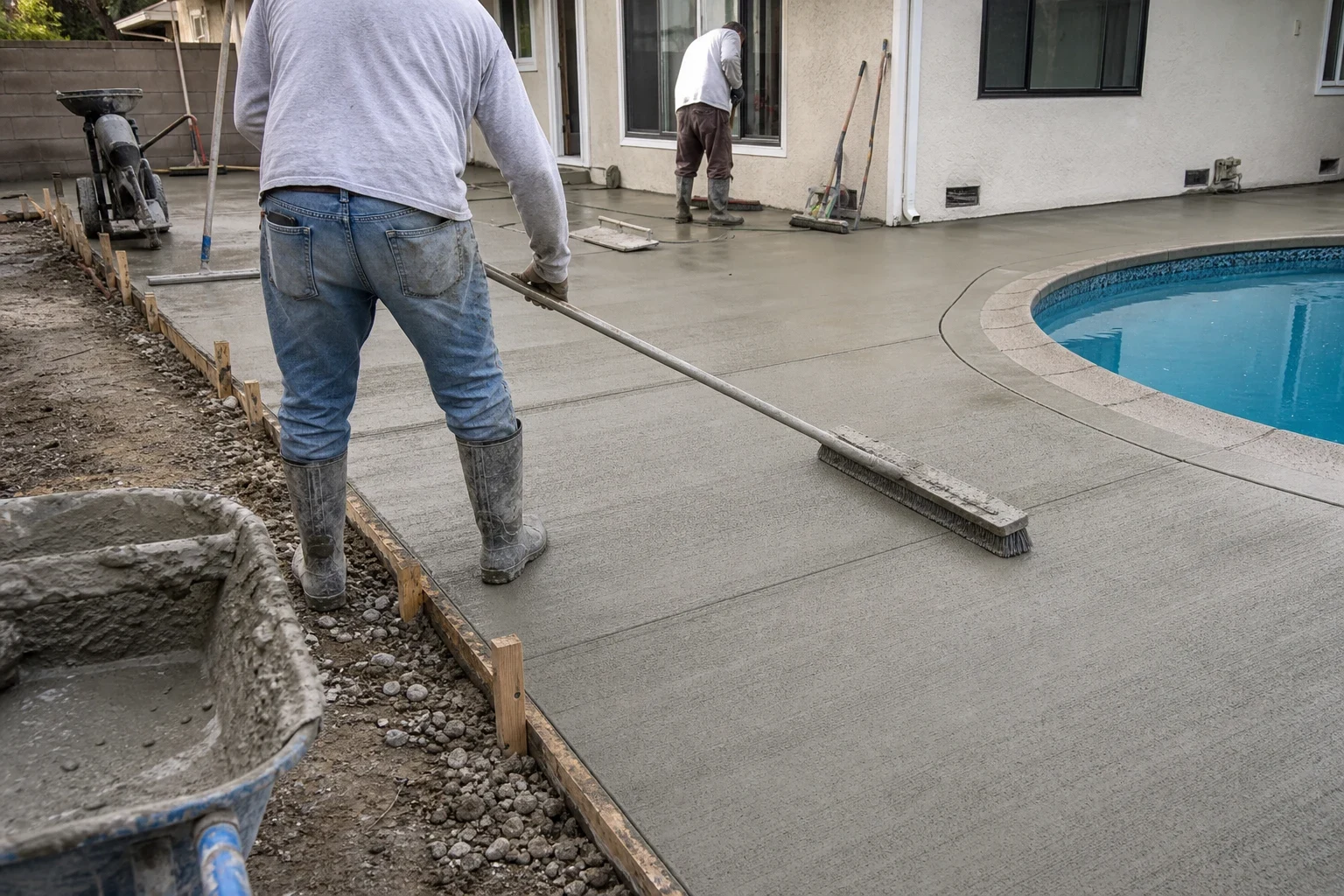
Concrete for Your Home in Tustin, Poured to Code and Finished With Care
We build driveways, patios, stamped concrete, pool decks and walkways for homeowners in Tustin, Irvine and Santa Ana. Before any concrete arrives, we tell you which permits and inspections your project needs and take care of them, so the finished slab looks right and passes when it counts.
- Permit paperwork handled
- Written line-item estimates
- Inspections scheduled for you
- Site protected, then cleaned
Concrete Work for Your Home
Most of our work is outdoor flatwork: driveways, patios, concrete backyards, side yards, courtyards, and walkways and sidewalks. We also pour pool decks, concrete slabs for sheds and equipment, RV parking pads, steps and stairs, and garage floors. Stamped concrete is available on most of these if you want the look of stone or tile with the durability of a poured surface. Each service page explains how that job is built and what affects its price.
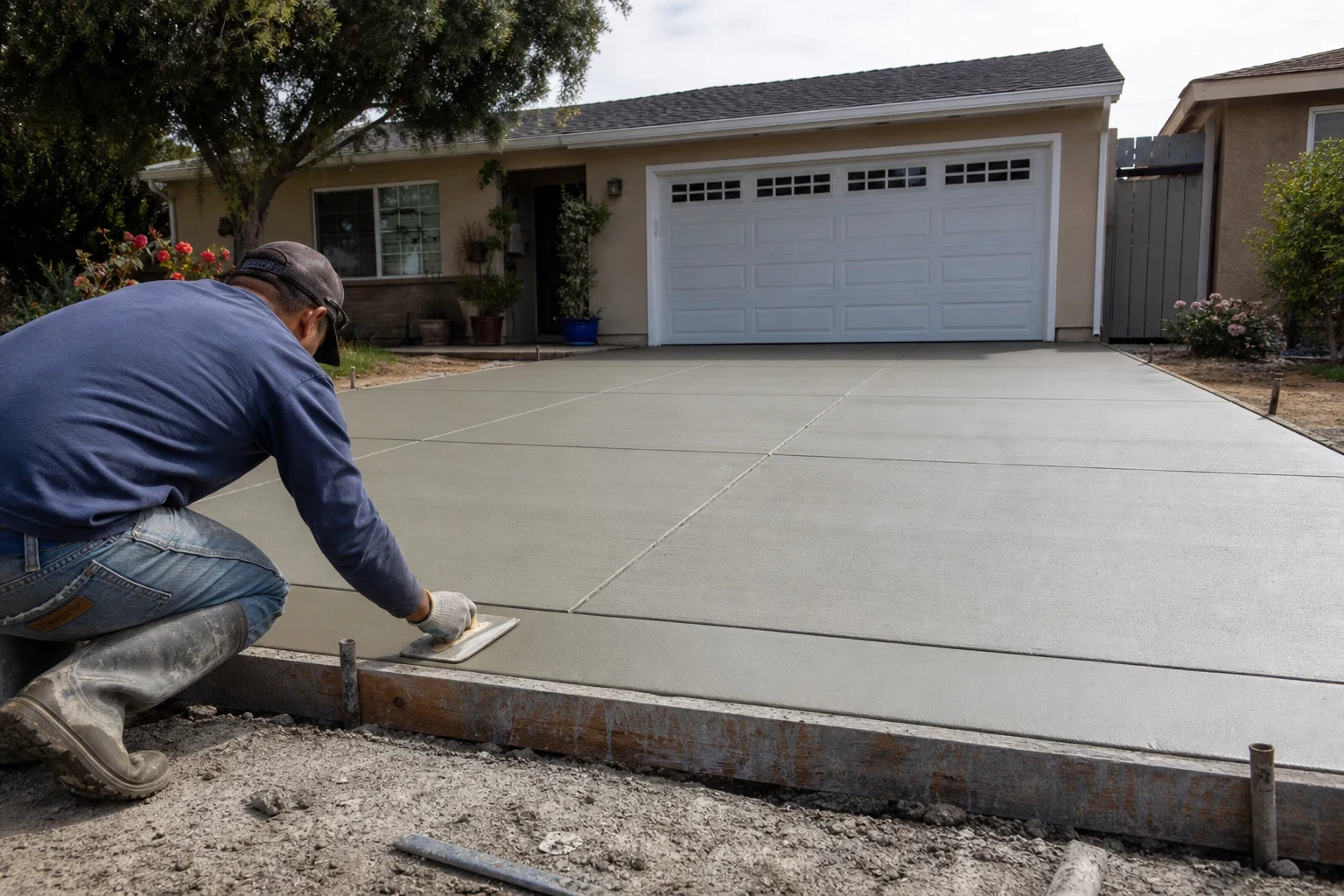
Driveways
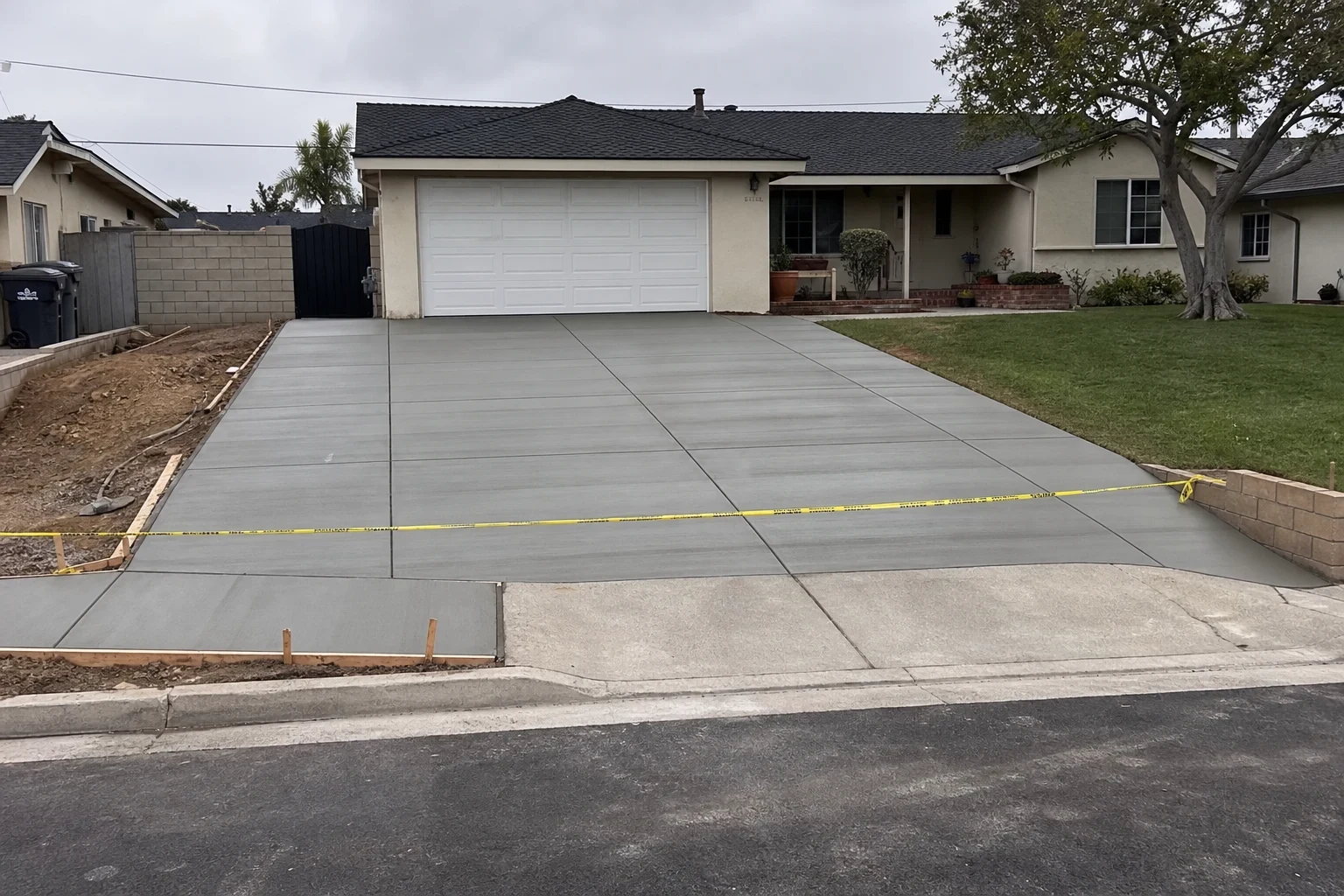
New and replacement concrete driveways built on a compacted base and sloped to drain, with any city sign-off handled before the pour.
Patios
New concrete patios built on a compacted base, pitched to shed water off your home, with setback and code questions answered before the forms go in.
Stamped Concrete
Patterned, colored concrete for patios, walkways and driveways, with the base, slope and any city sign-off sorted out before the truck arrives.
Concrete Pool Decks
New concrete pool decks with correct slope, clean joints at the coping and a finish that stays comfortable and sure-footed when wet.
Concrete Backyards
Full backyard concrete laid out around how you use the yard, with drainage, joints and code questions settled before the forms go in.
Concrete Slabs
Flat, reinforced slabs for sheds, spas, equipment pads and outdoor rooms, with base, thickness and code questions answered before we pour.
Steps and Stairs
New poured concrete steps and stairs with consistent riser heights, reinforced bases and code requirements worked out before we form a single tread.
Concrete Side Yards
A clean, level concrete path along the side of your home that sheds water away from the foundation and gives you a dry route to the gate, bins and equipment.
RV Parking Pads
A thick, reinforced pad sized to your RV, sloped to drain and laid out with city setbacks and HOA rules checked first.
Garage Floors
We remove a failing garage slab and pour a new reinforced floor that drains toward the door and holds up to daily parking.
Concrete Courtyards
Enclosed courtyard slabs with planned drainage, correct thresholds at every door and a finish chosen to suit the walls around them.
Walkways and Sidewalks
New front walks, garden paths and public sidewalk sections, formed to the right slope, with city paperwork handled when the work reaches the right-of-way.
Where We Work
Tustin is home base, and most of our driveways, patios and walkways go in here and in North Tustin, Irvine, Santa Ana, Orange and Costa Mesa. We also schedule projects in Anaheim, Garden Grove, Fountain Valley, Lake Forest and Laguna Woods.
- Tustin
- Irvine
- Santa Ana
- Orange
- North Tustin
- Anaheim
- Garden Grove
- Costa Mesa
- Lake Forest
- Fountain Valley
- Laguna Woods
Each city runs its own building department with its own rules, so we check the requirements for your address before we quote. The Service Areas page lists every city we cover.
How a Job Runs, Start to Finish
Most residential projects follow the same five steps. Knowing them ahead of time makes the week easier.
- 1
Phone call and site visit
You tell us what you have in mind by phone, then we come out to measure, check grades and drainage, and look at access for the truck. We also note anything that may need city or HOA approval.
- 2
Written estimate and city approval
You get a line-item estimate. Once you approve it, we prepare and file whatever paperwork the city requires and wait for its approval before we put the pour on the calendar.
- 3
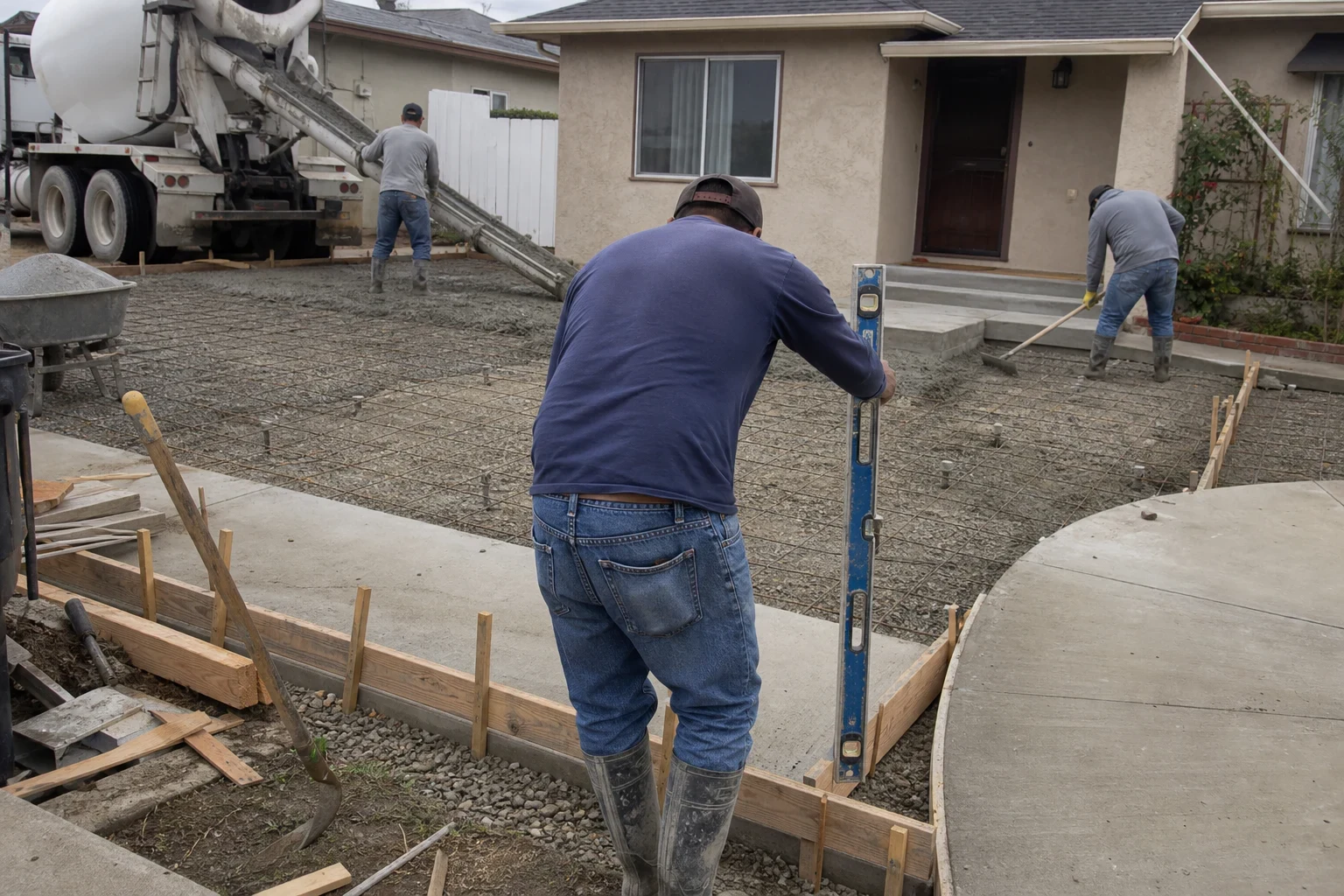
Demolition, base and forms
We remove old material, grade and compact the soil, set base rock, build forms and place reinforcement. If an inspection is required before the pour, it happens here.
- 4
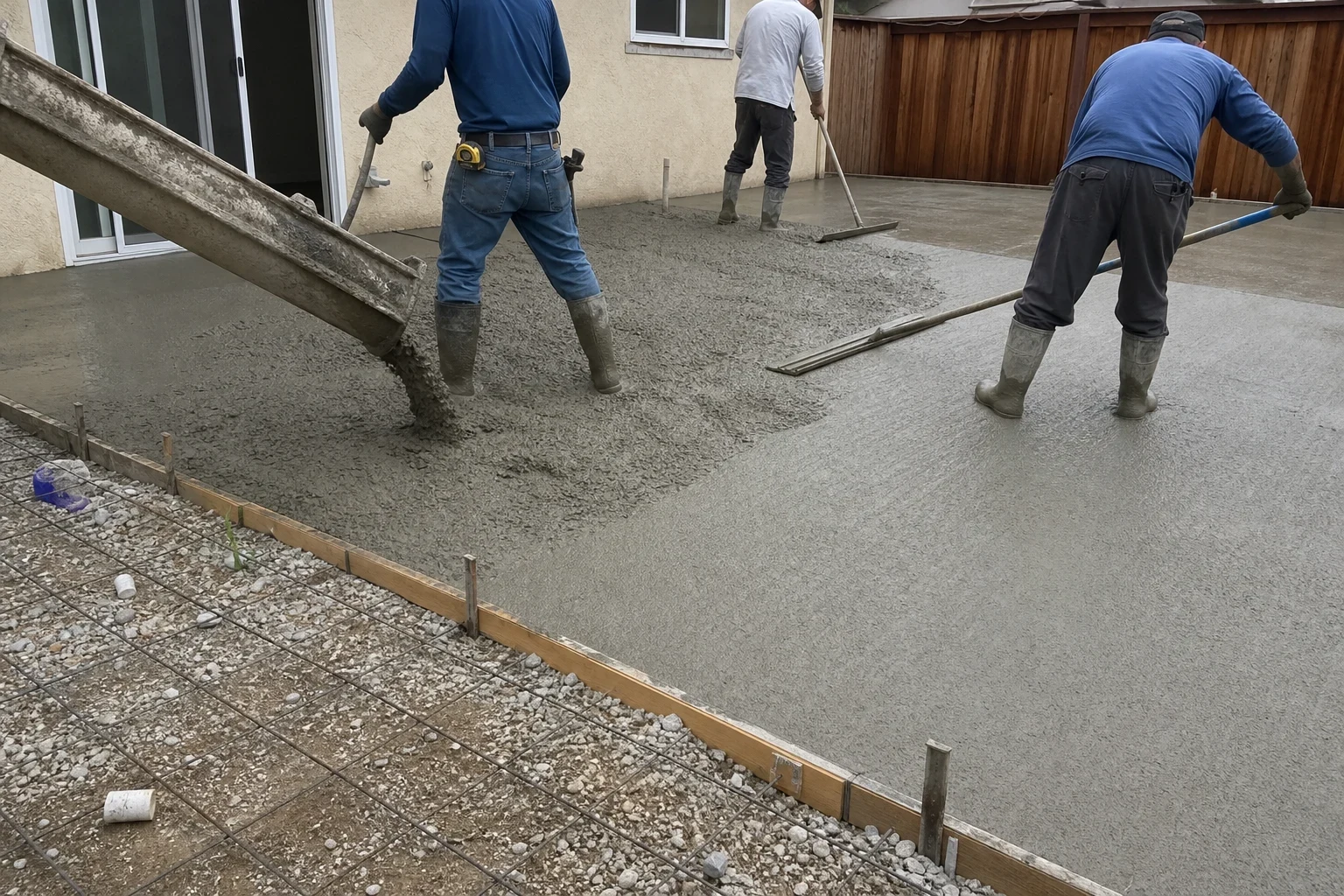
Pour and finish
Concrete is placed, leveled and finished while it is workable, then joints are cut. Stamped and decorative work happens in this same window, so timing matters.
- 5
Curing, cleanup and walkthrough
We strip forms, clean the site and walk the work with you. We go over when you can walk, drive or put furniture on it, and how to care for the finish.
About Tustin Concrete Contractor
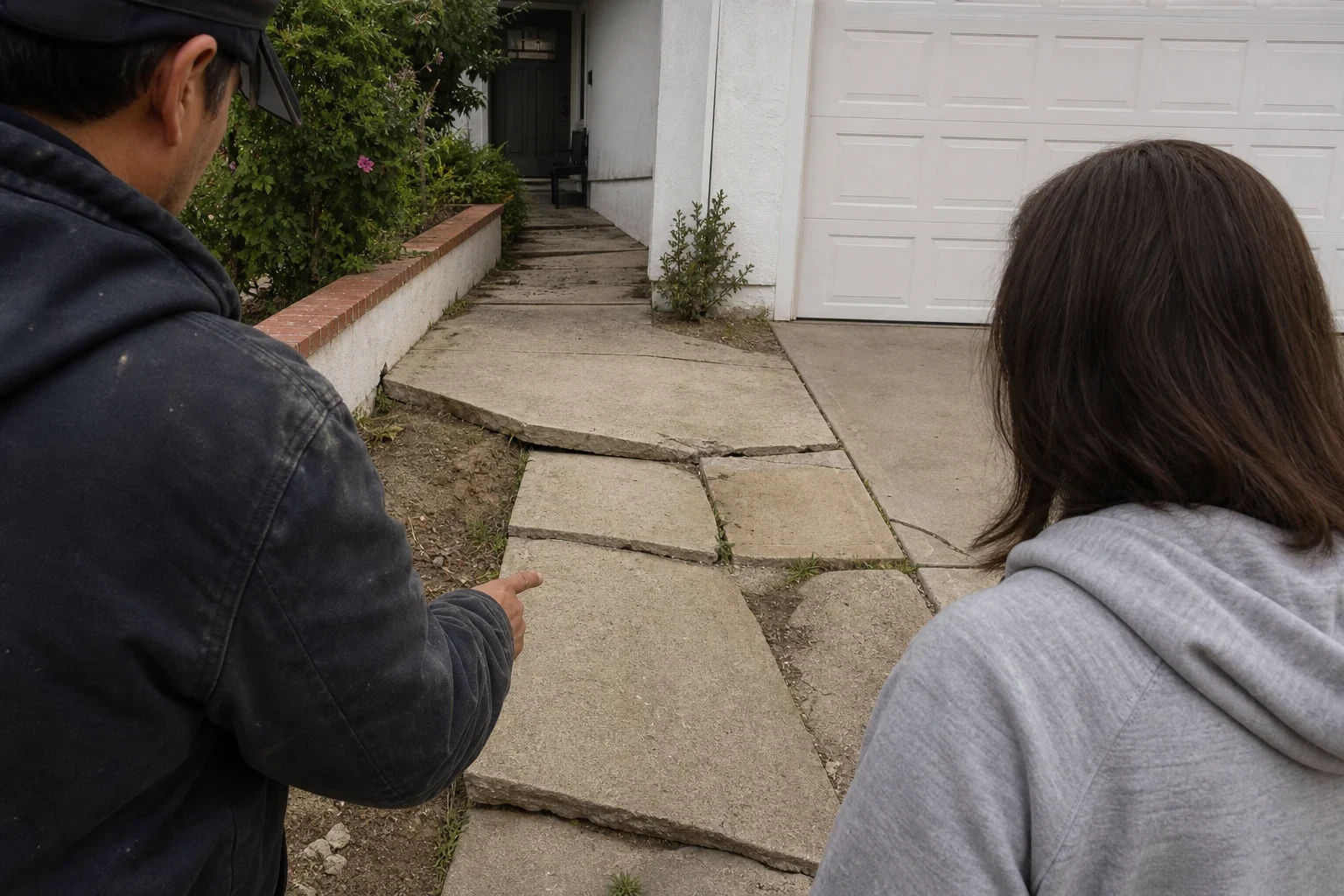
We are a residential concrete company working in Tustin and the cities around it. Our focus is the outdoor surfaces people use every day: the driveway you park on, the patio you eat on, the deck around your pool and the path to your front door.
We care about two things on every job. The first is that the work is built the way the code and the site call for, with the right base, steel, slope and paperwork. The second is the finish, because a clean edge and an even texture are what you see every time you step outside. We would rather explain a detail than skip it.
How We Work
Good concrete is mostly decided before the truck shows up. Grading, base, reinforcement and the code question all come first, and we treat them that way.
- 01
The code question answered early
Some concrete needs city approval and some does not. A driveway approach that crosses the sidewalk into the street usually needs sign-off from the city, while a backyard patio often does not. Stairs with a handrail, structural slabs and work near property lines can each bring their own rules. We tell you plainly which applies, pull the permit when one is required, and schedule the inspections.
- 02
Base and reinforcement you can see
We compact the subgrade, set the right depth of base rock and place rebar or wire on supports so it sits inside the slab instead of on the dirt. You are welcome to look before the pour. We also take photos of the prepared base so you have a record of what is underneath.
- 03
Joints placed on purpose
Concrete shrinks as it cures, and some cracking is normal. Control joints cut at the right spacing and depth give those cracks a straight, planned place to happen. We lay out joints to line up with corners and doorways so they read as part of the design.
- 04
A finish chosen with you
Broom finish, smooth trowel, exposed aggregate, salt finish or stamped patterns each feel different underfoot and wear differently in sun and water. We show samples and talk through slip resistance, heat and upkeep before you decide.
- 05
Your property protected
We cover nearby walls, plants and stucco from splatter, keep the truck path clear and haul away the old concrete and form boards. When we leave, the site is swept and the forms are gone.
Questions Homeowners Ask
Do I need a permit for a new driveway or patio?
It depends on the work. A backyard patio slab often needs no city approval, while widening a driveway approach into the street, building stairs or pouring a structural slab usually does. We check the rules for your city and address, tell you what applies, and handle the application and inspections when they are required.
How long before I can walk or drive on new concrete?
Walking on it gently is generally fine once a day or two has passed. Plan on about a week before you park a car on the new surface, and longer before a moving truck, an RV or another heavy load crosses it. Concrete keeps gaining strength for around a month, so at the walkthrough we give you dates that match your particular slab.
Will my new concrete crack?
Concrete shrinks as it cures, and small cracks are normal. What we control is where they go and how much the slab moves. A compacted base, proper reinforcement and well placed control joints keep cracks in straight lines at the joints instead of wandering across the surface.
How is the price figured?
We visit the site, measure, and look at removal, access, soil and finish. You then get a written estimate that lists each part of the job separately, including any city fees. If something unexpected turns up once the old concrete is out, we show you and agree on it before going further.
How thick will my driveway be?
Most residential driveways are poured at about four inches with steel reinforcement, and many people choose five inches or more where heavier vehicles park. RV pads and areas that see trucks usually go thicker still. We recommend a section based on what will drive on it and the soil we find, and the estimate shows it.
Is stamped concrete worth it compared to plain concrete?
Stamped concrete gives you the look of stone, slate or tile in a single poured surface, and it suits patios, pool decks and courtyards well. It costs more and needs resealing every few years to keep the color rich. Plain broom finish is simpler and very durable. We show you both so you can decide what fits.
Can you pour concrete in summer heat?
Yes, with some care. Hot, dry afternoons pull water out of fresh concrete quickly, which can weaken the top surface. We start pours early in the day, keep the base damp and cure the slab properly so the finish stays strong. On very hot days we may adjust the schedule rather than rush the work.
My neighborhood has an HOA. Can you help with approval?
Many communities require HOA sign-off on driveways, colors and stamped patterns. We can give you the drawings, dimensions and finish details your HOA usually asks for. Approval comes from the HOA, but we make the package much easier for you to put together.
What Shapes the Price of Your Project
Every concrete quote comes down to a handful of things. Some you choose, like the finish. Others are set by the site, such as what has to be removed and how far the concrete has to travel from the truck. Here is what we look at.
After the site visit, we put the estimate in writing and break it into separate lines for removal, base, concrete, finish and any city fees. If something changes once work begins, we talk with you before doing it.
- Size and thickness
- Square footage drives the amount of concrete, but thickness matters too. A driveway or RV pad needs a thicker section and heavier reinforcement than a garden walkway.
- Removal and grading
- Tearing out an old slab, hauling it off and regrading the soil can be a real share of the work. Sloping the new surface so water drains away from your home is part of it.
- Access to the pour
- If the truck can reach the forms, the pour is simpler. Narrow side yards and backyards behind the house may need a concrete pump or wheelbarrow work, which adds labor.
- Finish and decoration
- A broom finish is the most straightforward. Stamping, color, exposed aggregate and sealers each add materials and time on the day of the pour.
- City fees and inspections
- When the city has to approve the work, its fees and the time for inspections become part of the job. We list them on the estimate so they are not a surprise later.
- Soil conditions
- Expansive clay is common across Orange County and moves as it wets and dries. Where we find it, extra base or reinforcement may be the right call, and we explain why.
Planning New Concrete for Your Home
Tell us what you want to build and where. We will talk through the code requirements, finish options and timing, then set up a visit to measure.