ServicesConcrete Side Yards
Concrete Side Yards in Tustin
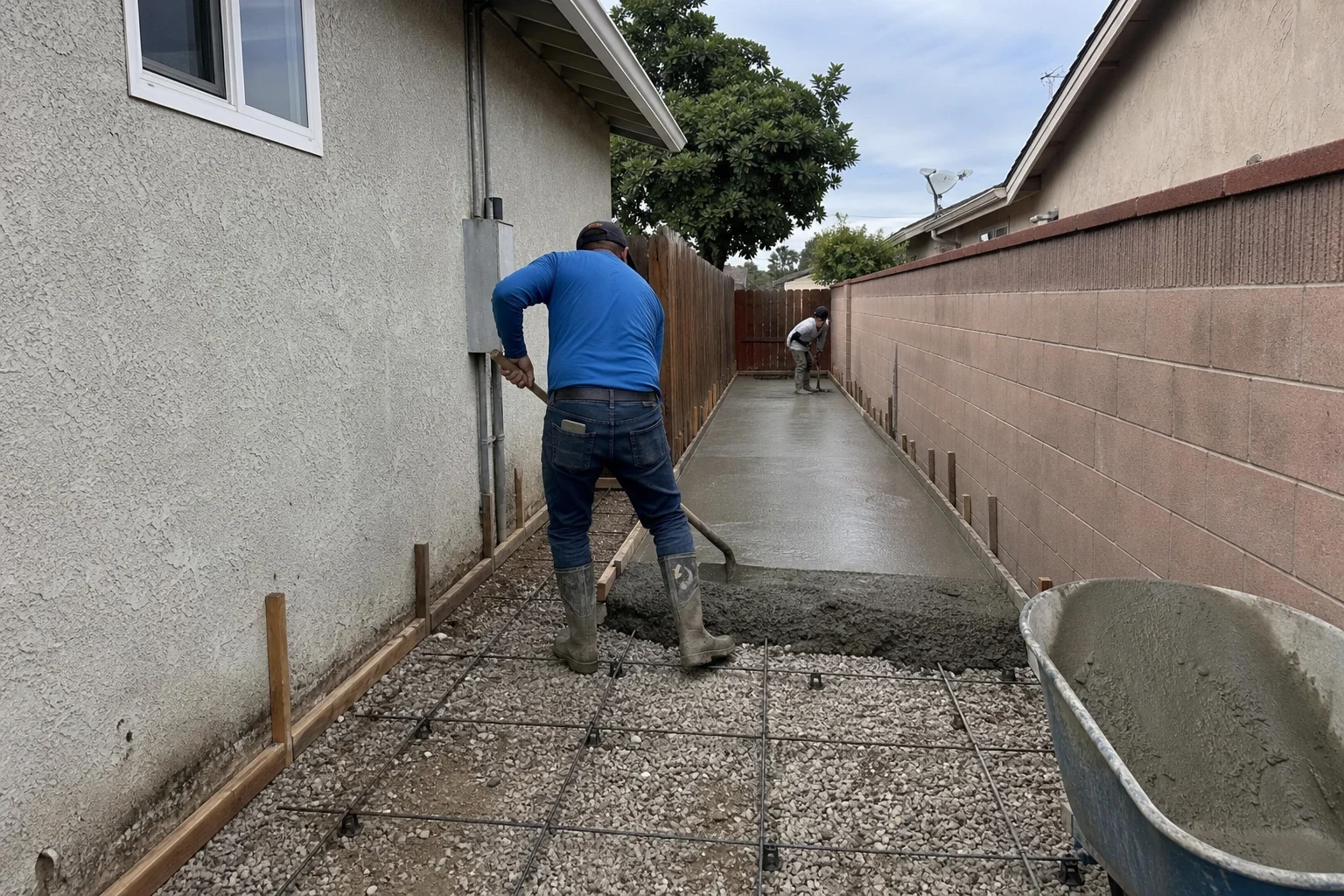
We pour side yard concrete that slopes water away from your home, sits below the stucco weep screed where it should, and works around meters, cleanouts and AC units. You get a dry, even path and an explanation of any permit or drainage requirement before work starts.
A narrow strip that has to do a lot of work
The side yard is usually the least-loved part of a property, yet it carries the most traffic you never see: trash bins, the gardener's mower, pool equipment service, and every drop of rain that runs off that side of the roof. Bare dirt or loose gravel there turns to mud, settles against the foundation and invites weeds.
A concrete side yard fixes that, but only if it is built with the house in mind. The slab has to fall away from the foundation, stay low enough that it doesn't bury the weep screed at the bottom of your stucco, and hand the water off to a drain or a safe outlet instead of the neighbor's yard. Those details are what building code cares about, and they are the details we plan first.
Many side yards in Tustin sit on clay soil that swells when wet and shrinks in the long dry season. We account for that with base preparation and joint layout, so the slab moves where we choose rather than cracking at random.
What the work includes
Site check and layout
We measure the run, note the property line, and mark every meter, hose bib, sewer cleanout and condenser pad in the path. Final grades are set from the foundation outward.
Excavation and base
We remove soil and roots to the depth needed, then place and compact a granular base. On expansive clay this layer matters as much as the concrete above it.
Slope and weep screed clearance
The surface is formed to fall away from the house. We keep the finished concrete below the stucco weep screed so moisture can still escape from the wall.
Drainage tie-in
Where water needs somewhere to go, we set area drains or a channel drain and connect them to an approved outlet. Downspouts on that side can be piped into the same line.
Reinforcement and joints
We add steel reinforcement, place an isolation joint against the foundation, and cut control joints at close spacing, which a long, narrow slab needs.
Surface texture and site clearing
A light broom texture is the usual pick because it stays grippy when sprinklers or a hose wet it. We can also trowel it smoother or carry over a pattern from our stamped concrete work. Forms, spoils and leftover material leave with us, and the walk is swept clean.
Signs your side yard is ready for concrete
Water pools by the wall
Puddles that sit against the foundation after rain mean the grade is flat or tipped toward the house. Over time that can wet the slab edge and the bottom of the stucco.
Soil is up against the stucco
If dirt or mulch has crept up over the weep screed, the wall can't drain. Lowering the grade and paving it keeps it that way.
Bins and mowers get stuck
Wheels that sink into soft ground or catch on stepping stones make a short trip a chore. A continuous slab rolls easily to the gate.
Weeds and gravel keep coming back
Gravel migrates, landscape fabric tears and weeds return each spring. Concrete ends the yearly cleanup.
Equipment needs a stable base
Pool pumps, water heaters and AC units on sinking pavers or bare soil can shift. A properly graded slab gives them firm footing and keeps service access clear.
How a side yard project runs
- 1
Walkthrough and plan
We look at the space with you, check drainage and clearances, and explain whether the job needs a permit, HOA approval, or neither. Your estimate is written line by line.
- 2
Prep day
Our crew excavates, sets forms and grades, and installs base, drains and reinforcement. Narrow access usually means wheelbarrows or a line pump, and we protect walls, fences and plants along the route.
- 3
Inspection when required
If the city needs to see the work before the pour, we schedule that inspection and wait for sign-off. Nothing gets covered up early.
- 4
Pour and finish
Concrete is placed, leveled, finished and jointed in one visit. We cure it properly so the surface hardens evenly.
- 5
Curing and walkthrough
You can walk on the new slab after roughly 24 to 48 hours, but give it about a week before rolling heavy equipment across. Before we leave, we explain how to care for the surface, clear the site and make sure the gate swings freely.
What shapes the price of a side yard
Side yards look simple, but narrow access and drainage often drive the price more than square footage does. We price each one after seeing it, and the written estimate shows every line so you know where the money goes.
- Length and access
- A long run with a single narrow gate takes more labor to excavate and pour. Whether a line pump is needed changes the cost too.
- Existing grade and soil
- Lowering soil that sits too high against the house means more digging and haul-off. Heavy clay may call for a deeper base.
- Drains and downspouts
- Area drains, channel drains and piping to an approved outlet add material and labor. They are often the reason a side yard stays dry.
- Obstacles in the path
- Meters, cleanouts, gas lines and equipment pads take careful forming around. Some need access boxes or adjusted heights.
- Finish choice and fees
- A broom texture keeps the cost lowest, while stamped or colored work adds to it. Any city or inspection fees appear on their own line.
Side yard questions we hear often
Something not covered here? (714) 582-1691
Do I need a permit to pour a side yard?
Often a simple flatwork pour doesn't need a building permit, but changes to grading or drainage, or work tied to other improvements, can. HOA rules may apply as well. We check the requirements for your property during the walkthrough and tell you plainly what applies.
How much slope should the concrete have?
Code calls for hard surfaces next to the house to fall away from the foundation, typically around 2 percent for the first 10 feet. In a narrow side yard that usually means sloping toward a drain or along the length to the front or back. We set the grades before we pour so water never sits against the wall.
Will the concrete cover my stucco weep screed?
It shouldn't, and we build so it doesn't. The finished surface stays below the screed with the required clearance so the wall can still drain. If the existing soil is too high, we lower it as part of the job.
What happens to my gas meter and sewer cleanout?
We form around them and keep them accessible. Cleanouts may get a box or be brought to the finished height, and we leave the required working space around meters.
Can the side yard match my patio or backyard?
Yes. We can match a broom finish, color or stamped pattern so the side yard ties into your patio or concrete backyard. Expect a slight difference in shade as new concrete cures next to older work.
Ready for a drier, cleaner side yard
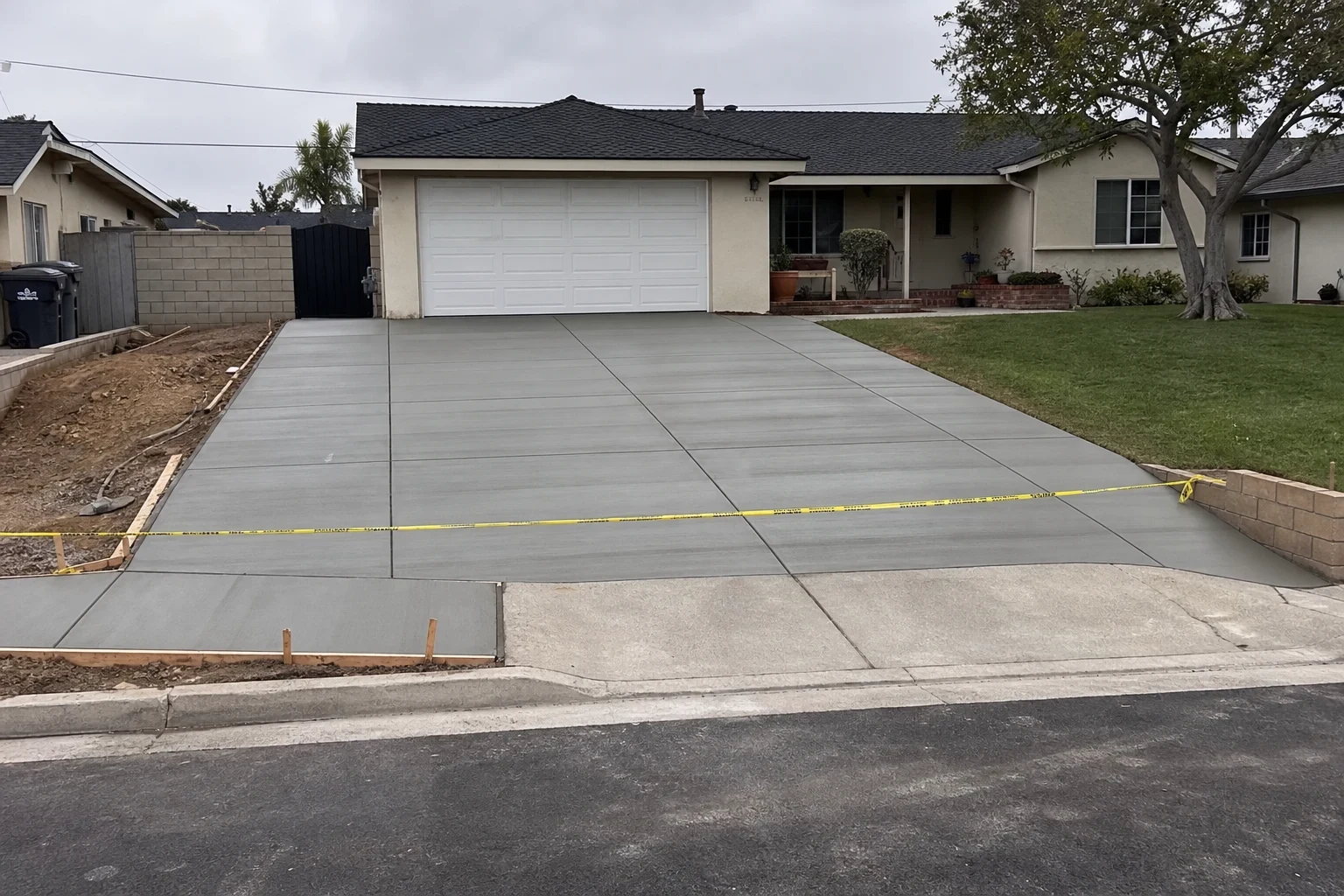
Tell us about the space and what you use it for. We'll explain the drainage, clearances and any city requirements, then set up a time to see it in person.