ServicesGarage Floors
Concrete Garage Floors in Tustin
We remove a sunken, broken or crumbling garage floor and pour a new slab that is compacted, reinforced and sloped toward the door as the building code expects. You get a straight answer on permits, a careful finish and a floor ready for your car.
A new slab under your cars, poured to code
A garage floor carries thousands of pounds every day. It takes hot tires, dripping oil and the weight of storage shelving, and it sits right against your home's foundation. When the old slab has settled, heaved or broken into loose pieces, a surface coating will not hold. Taking it out and pouring new is the lasting answer, and that is the work we do.
The code side matters more here than most people expect. A garage floor needs a noncombustible surface, and it should slope so water drains toward the vehicle door, not back toward the house. The step at the door into your home has to stay correct too. We explain which of these apply to your garage, check whether your job needs a permit, and schedule any inspection before concrete is placed.
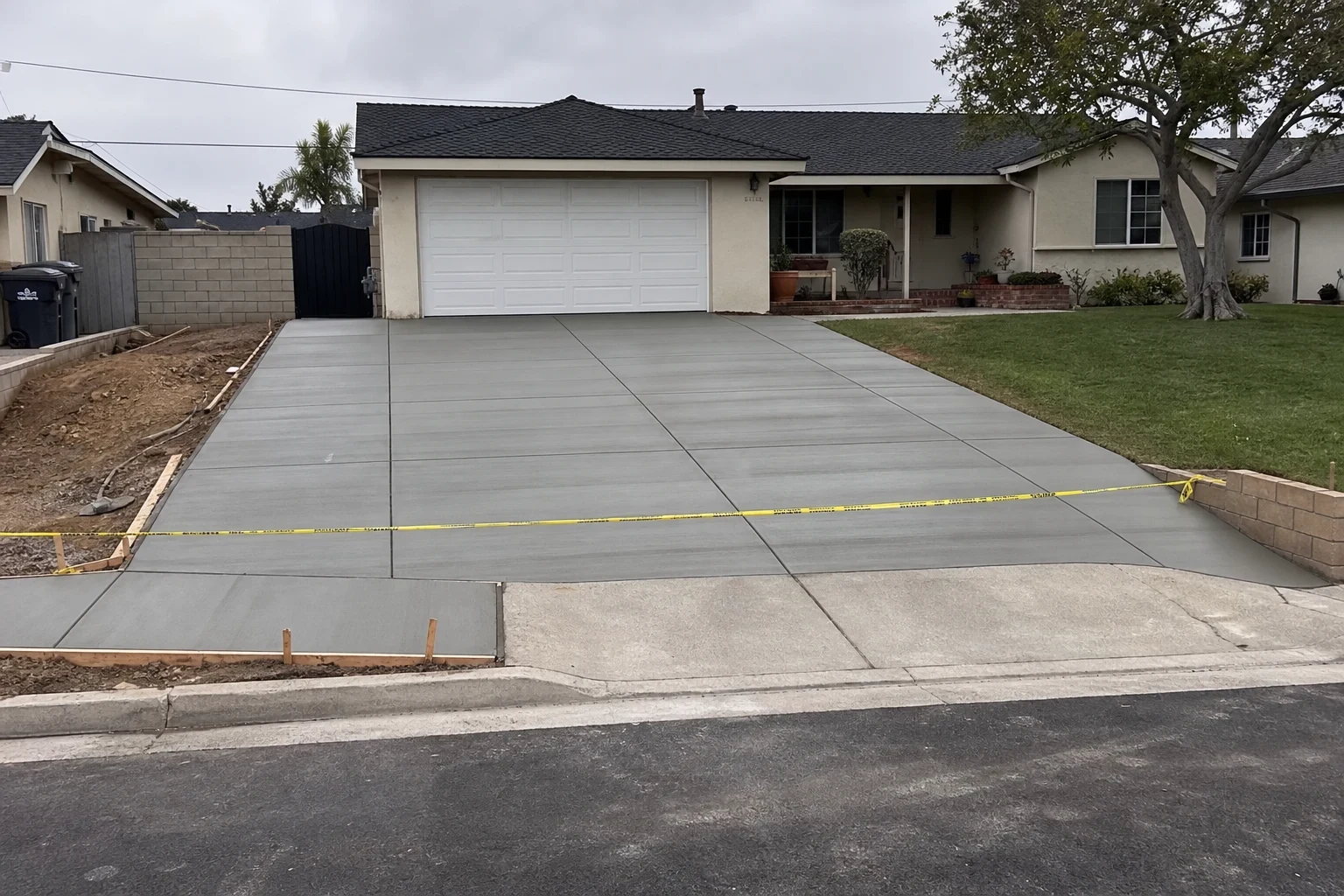
Planning a new driveway as well? We can pour both so the apron meets the garage floor cleanly at the door.
What a garage floor replacement includes
Saw-cutting and haul-off
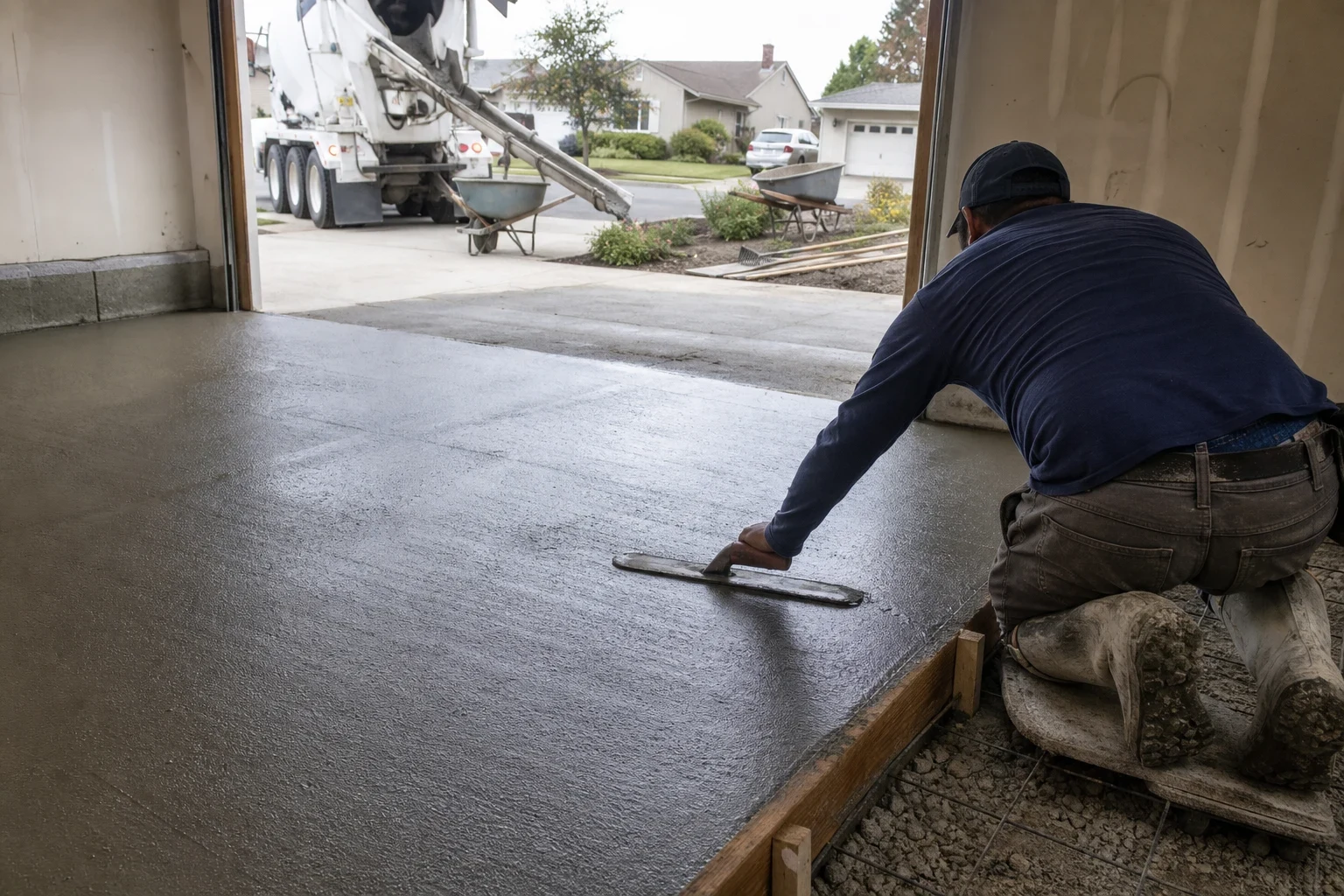
We saw-cut the old slab along the door line and foundation edge, break it out and haul the debris away. Walls, the door track and the opening into your home are protected while we work.
Subgrade and base
Soft or wet soil is the usual reason a garage floor sinks. We dig out what will not hold, bring in base rock and compact it in layers so the new slab has firm, even support.
Vapor barrier and steel
A vapor barrier goes down when your use calls for one, such as a finished floor coating or a workshop. Rebar or wire mesh is set on supports so the steel sits inside the slab where it does its job, not flat on the ground.
Slope toward the door
Forms and screed lines are set so the floor falls gently toward the garage door. Water from a wet car or a leaking water heater runs out instead of toward the door into your home.
Control joints and finish
Joints are cut at planned spacing so normal shrinkage cracks follow straight lines. We finish with a smooth steel trowel or a light broom texture for grip, whichever suits how you use the space.
Signs it is time for a new garage floor
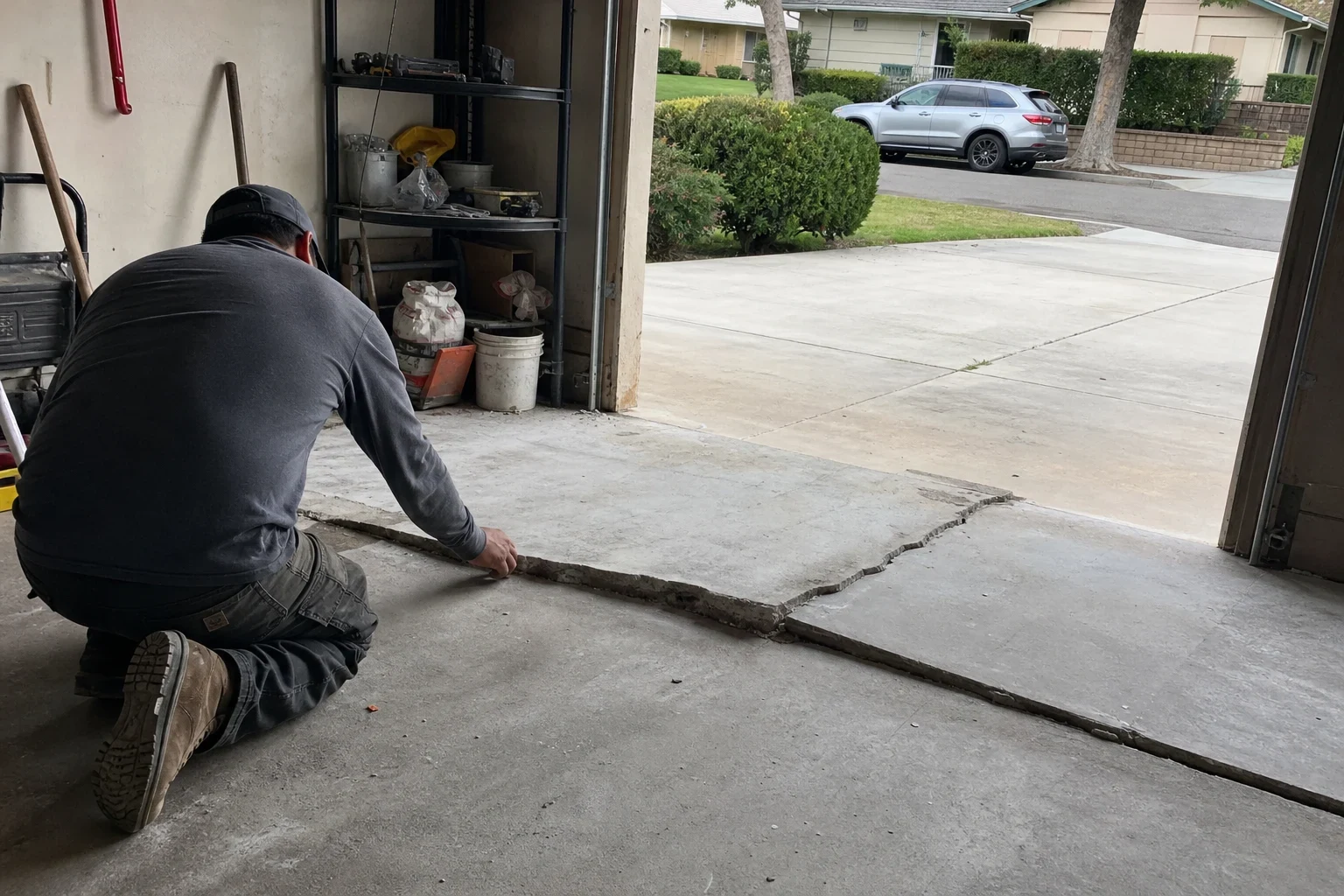
- Sections that rock or have dropped
- Pieces that tip under a tire, or sit lower than the slab beside them, tell you the soil underneath has moved. Anything laid on top will move with it.
- Water runs toward the house
- If rinse water or rain from the car pools by the interior door or along the back wall, the slope is wrong. That moisture works into drywall, stored boxes and the base of the wall.
- Wide or offset cracks
- Hairline cracks are normal in concrete. Cracks wide enough to catch a coin, or edges that sit higher on one side, point to ongoing movement, which is common in the clay soils found across much of Orange County.
- Flaking, pitting and loose stone
- A surface that sheds grit and exposes aggregate was often finished too wet or never cured properly. It keeps wearing and holds oil stains deep in the pits.
- A new use for the space
- A home gym, heavy tool storage or a workshop puts new loads on the floor. Before you move equipment in is the easiest time to pour a stronger slab.
How your garage floor job runs
- 1
A call and a look at the slab
It starts with a phone call. We then come out to measure the garage, check the slab and the threshold at the house door, and ask how you use the space.
- 2
Written estimate and city check
You get a written, line-item estimate. We check with the City of Tustin whether your scope needs a permit; if it does, we pull it and tell you what the inspector will look at.
- 3
Removal and prep
We clear and protect the area, cut and remove the old floor, then grade, compact and place the barrier and steel. If an inspection is required before the pour, it happens here.
- 4
Pour and finish
The ready-mix truck arrives and we place, screed, float and finish the slab in one continuous session. Control joints are cut once the concrete can take the saw without raveling.
- 5
Curing and walkthrough
We keep the surface moist or sealed while it cures and leave the site swept. Before we go, we walk the floor with you and explain when you can walk, park and move shelving back.
What shapes the cost of a garage floor
Every garage floor is priced from its own measurements and condition, so we quote after seeing it. Your written estimate lists each part of the job, and you can see exactly where the money goes. These are the things that move the number most.
- Size and thickness
- A two-car garage takes far more concrete than a single bay. A thicker slab for heavy equipment adds material and steel.
- Removing the old slab
- Thick or heavily reinforced old floors take longer to cut and break, and the debris weighs more to haul.
- What is underneath
- Wet, loose or expansive soil may need to be dug out and replaced with base rock. We often cannot know the full picture until the old slab is up, and we tell you right away if it changes anything.
- Access for the truck
- When the truck can reach the garage door, concrete goes straight in. A steep driveway or tight approach can mean a pump or wheelbarrows.
- City fees, finish and coatings
- Plan review and inspection fees apply only when the city requires them. A smooth trowel finish ready for an epoxy coating takes more labor than a broom finish.
Garage floor questions
- Do I need a permit to replace my garage floor?
- It depends on the scope of the work. A like-for-like slab replacement is treated differently from a job that changes the floor height, the structure or the door threshold. We check with the city before we quote and include any inspection steps in your estimate, so nothing is left to guesswork.
- How soon can I park on the new floor?
- You can usually walk on it after about a day. Most cars can go back in after about a week, depending on the weather and the mix. Concrete keeps gaining strength for around four weeks, so we suggest holding off on heavy equipment until then.
- Can you pour a new layer over my existing floor?
- Usually we advise against it. A new layer raises the floor against the house door step and the garage door seal, and it sits on the same soil that caused the trouble. Removing the old slab lets us fix the base and get the slope right.
- Will my new garage floor crack?
- All concrete shrinks as it cures, and some fine cracking is normal. Good compaction, proper steel and well-placed control joints keep cracks narrow and guide them along straight lines where they are hard to notice.
- Can I put an epoxy coating on it later?
- Yes. Tell us at the estimate so we can plan a vapor barrier and a smooth trowel finish. New concrete needs to cure fully before most coatings go on, so expect to wait several weeks.
Start with a look at your garage
Tell us about the floor and how you use the space. We will set a time to measure, sort out what the city requires and walk you through your options.