ServicesConcrete Slabs
Concrete Slabs in Tustin
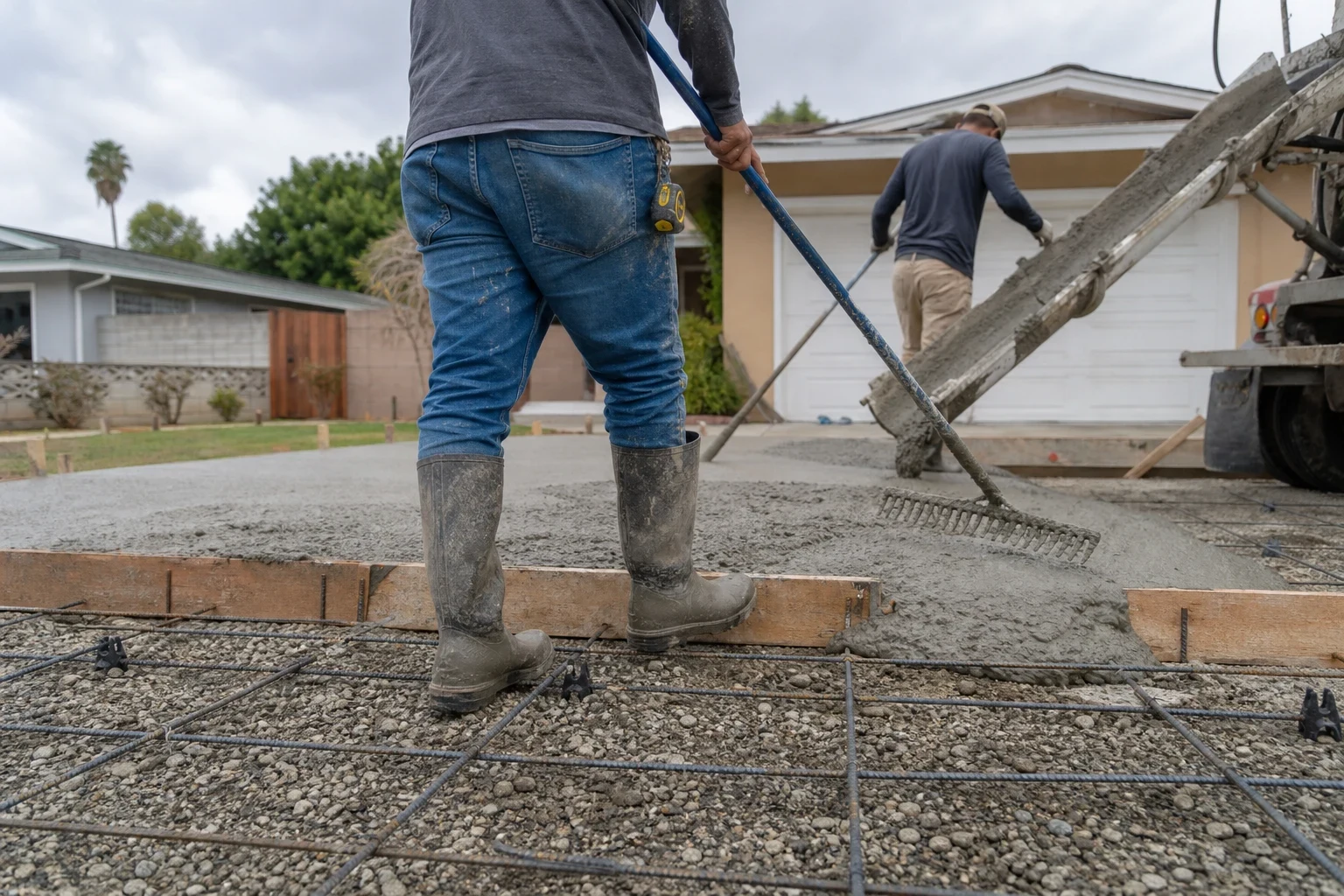
We form and pour concrete slabs for sheds, spas, AC units and outdoor living space. Before any concrete arrives, we confirm the thickness, the reinforcement and whether your project needs a permit, so the slab carries its load and passes inspection if one is required.
What's beneath a slab decides how it lasts
Most slab failures begin before any concrete arrives: a weak base, a section too thin for its load, or no plan for runoff. That's where we begin. We check the soil, measure grade against your house and ask what will sit on it, from a prefab shed to a filled hot tub or a future patio cover.
Tustin and much of Orange County sit on clay that expands when wet and shrinks when dry. We compact a solid aggregate base and place control joints where cracking is most likely, so any cracks run straight and stay unnoticeable.
Whether a slab needs a building permit depends on what it supports and how it connects to your house. We check with the city before scheduling, explain the answer plainly and handle the paperwork when it's needed.
What comes with your slab
Site review and layout
We measure, check the grade and have utilities marked before digging. The exact footprint is staked so you can see it before excavation.
Permit and inspection review
We find out from the city whether your slab needs a permit and inspection. When it does, we prepare the forms and time the inspection around the pour.
Digging and compacted base
Soil comes out to the proper depth, then gravel goes in and is compacted in layers. A solid, even base keeps the slab from sinking or rocking at its corners.
Forms and steel
Forms are set flat or with a slight fall away from the house. Rebar or mesh rests on supports so it ends up within the concrete instead of on the ground, where it would do nothing.
Pouring, finishing and joints
The concrete is placed, screeded and finished for its purpose, smooth-troweled under a shed or lightly broomed where people walk. Control joints are cut or tooled to a planned layout.
Curing and cleanup
We show you how to keep the slab damp and protected the first few days, and we haul off forms, soil and debris before leaving.
When a new slab is the right call
- A shed or spa is on order
- Pavers and gravel can shift under a heavy tub or a framed shed. A reinforced slab gives the manufacturer the level, solid base their instructions call for.
- Equipment sits on bare ground
- AC condensers, pool equipment and generators run better and last longer on a level pad that drains, kept clear of mud and settling.
- An old slab has sunk or heaved
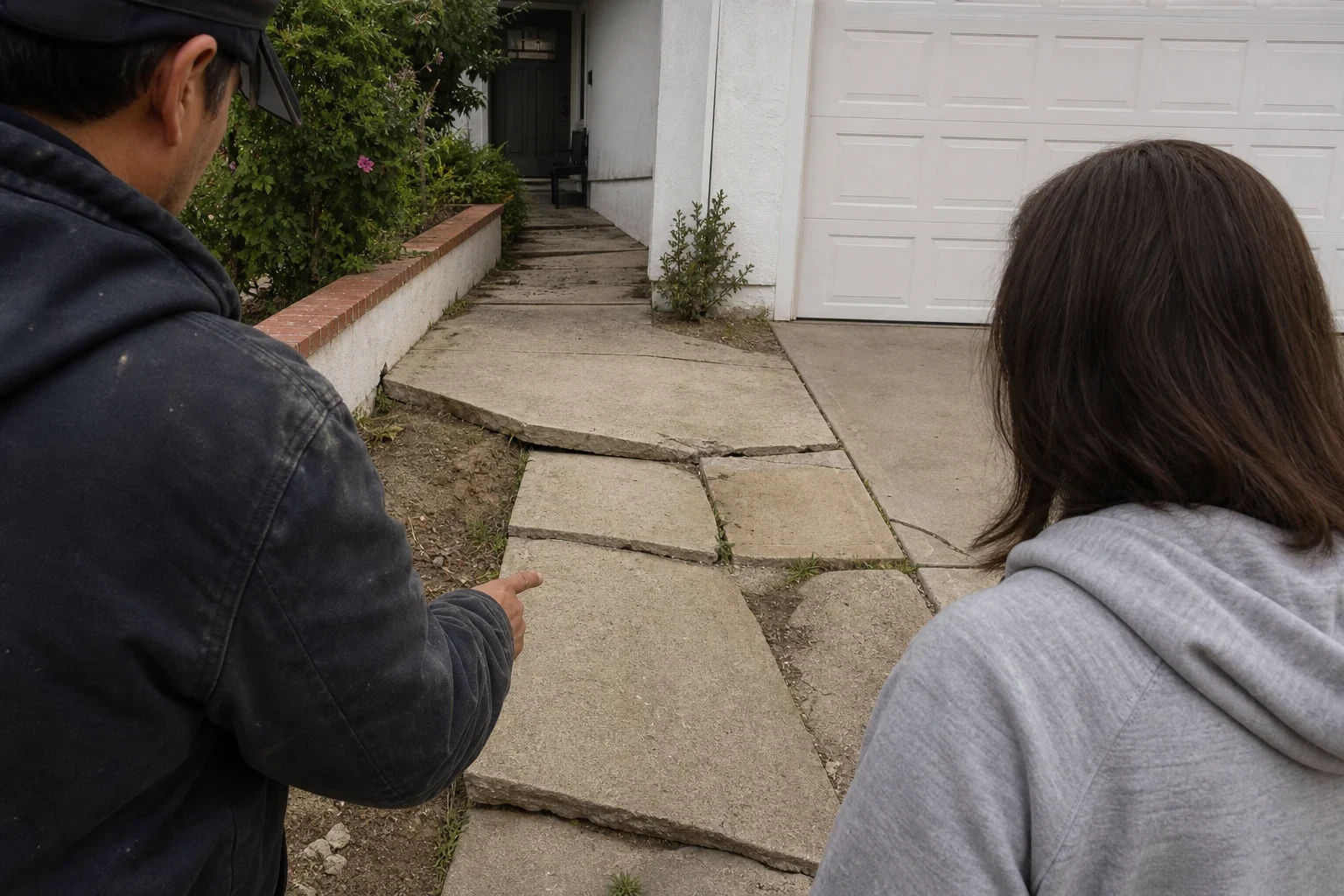
- When a slab has dropped, tilted toward your home or broken into uneven sections, a clean tear-out and new pour is often the sound answer. We'll tell you honestly what we see.
- Water pools near your foundation
- A slab that slopes the wrong way sends rain toward the house. A new one can be formed to carry water away from your home.
- You're planning a cover or outdoor room
- If a patio cover, pergola or outdoor kitchen is coming later, the slab and any footings should be sized for it now. That's also when code questions matter most.
Steps in a slab project
- 1
First call
You describe what the slab will hold and about where it goes. We ask about the load, how we reach the yard and whether a cover or structure is planned.
- 2
Visit and written estimate
We measure, check grade and soil, and give you a line-item estimate for excavation, base, steel, concrete and finish, plus any city inspection.
- 3
Prep work
We dig, compact the base, set the forms and place the steel. Any required pre-pour inspection happens now.
- 4
The pour
Placing, finishing and jointing happen in a single visit, and most small slabs wrap up the same day. Walls, plants and hardscape nearby stay protected.
- 5
Curing and handover
Once the concrete sets, the forms come off. We explain how long to wait before walking on it, setting a shed or filling a spa.
What drives the price of a slab
Each slab is priced from its own measurements and site, so we quote after a visit. The written estimate splits the job into parts, excavation through finish, each on its own line. These factors usually change the total most.
- Footprint and depth
- Square footage sets how much concrete you need. A heavy spa or vehicle load calls for a thicker section, sometimes with thickened edges, compared with a small shed pad.
- Getting to the yard
- A tight side gate or a yard far from the street may mean wheelbarrows or a pump. Easy truck access keeps labor lower.
- Tear-out and soil work
- Removing and hauling an old slab or fixing soft, wet ground takes extra time. A clear, firm site is cheaper to prep.
- Steel and surface
- Rebar grids cost more than mesh, and decorative finishes more than broom or trowel. We pick both to fit the slab's job.
- Permit fees and inspections
- If the city requires a permit, its fees and inspection timing become part of the work. We tell you up front so nothing shows up late.
Common slab questions
- Will my slab in Tustin need a permit?
- That depends on the job. A plain flat slab at grade often doesn't, while one under a structure, a patio cover or anything attached to the house may. We check with the city before scheduling and take care of paperwork and inspection when required.
- How thick does my slab need to be?
- Four inches is typical for light loads such as a small shed or foot traffic. A filled hot tub or a vehicle needs more depth and heavier steel. We also review the equipment maker's specs so the slab meets them.
- Is the slab going to crack?
- Concrete shrinks while curing, so minor cracks are expected. Planned control joints guide them, and a compacted base and proper steel keep them tight and the surface flat.
- When can the slab hold a spa or shed?
- Light walking is usually okay after a day or two. Heavy loads need to wait while the concrete gains strength, often a few weeks for a full spa. We give you timing for your specific slab.
- Can a slab go right next to my foundation?
- Yes. We keep the finished height under any weep screed or siding line and slope the surface away so water moves out from the foundation, not toward it.
Get a clear plan for your slab
Let us know what the slab will hold and where it goes. We'll go over thickness, base and city requirements, then book a time to measure.