ServicesRV Parking Pads
Concrete RV Parking Pads in Tustin
We build RV parking pads thick enough for the load, reinforced with steel, and sloped so water leaves the slab. Before any forms go in, we check the setbacks, the HOA rules and whether your approach needs a permit, so the pad suits your home and the rules.
A pad built for weight, not foot traffic
A motorhome or loaded trailer puts far more weight on concrete than a car does, and it sits in one spot for weeks. Most of that weight comes down through the tires and the leveling jacks. A standard four-inch patio slab will crack under it. An RV pad needs more depth, rebar, and a base that has been compacted properly so the ground does not settle under the tires.
The rules come before the pour. Many cities limit where a recreational vehicle can be parked, how far it must sit from the property line, and whether it needs screening. Work that touches the curb or the sidewalk usually needs city approval. We look into these questions first and explain what we find in plain terms, so you know where the pad can go before you commit to a size.
What goes into the pad
Layout and rules check
We measure your RV, the turning path and the gate opening. Then we check the setbacks and any HOA conditions that affect placement.
Excavation and compacted base
We dig out the soft topsoil, bring in aggregate base and compact it in layers. Clay soils swell when wet and shrink when dry, and a well-built base is what keeps the slab steady through those changes.
Thicker slab with rebar
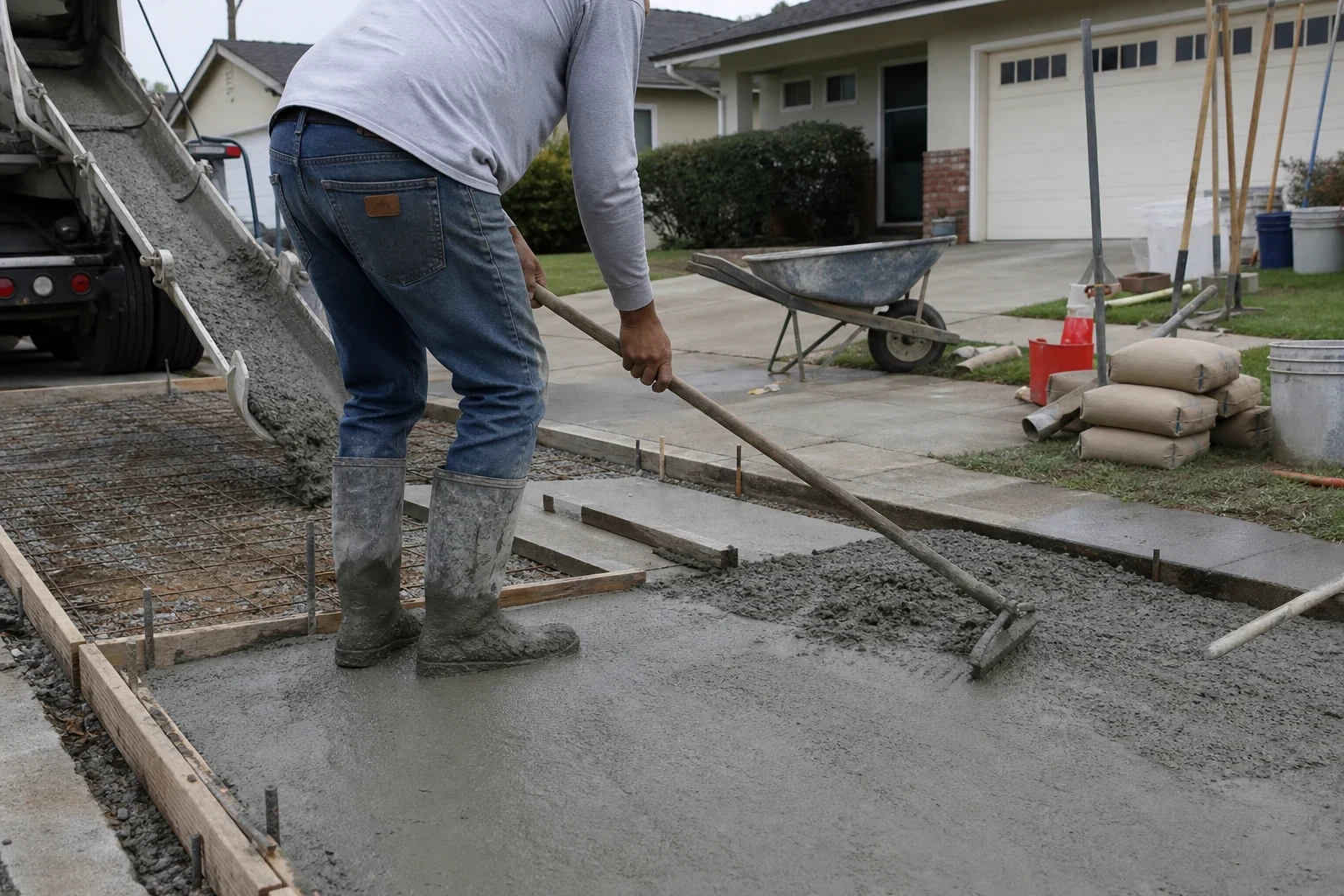
RV pads are formed deeper than a walkway or patio, with a rebar grid set on supports so the steel stays in the middle of the slab instead of resting on the dirt.
Drainage slope and joints
We set a gentle fall so water moves away from your home and the gate. Control joints are cut where the slab is most likely to crack, so any cracking follows a straight line.
Approach and transitions
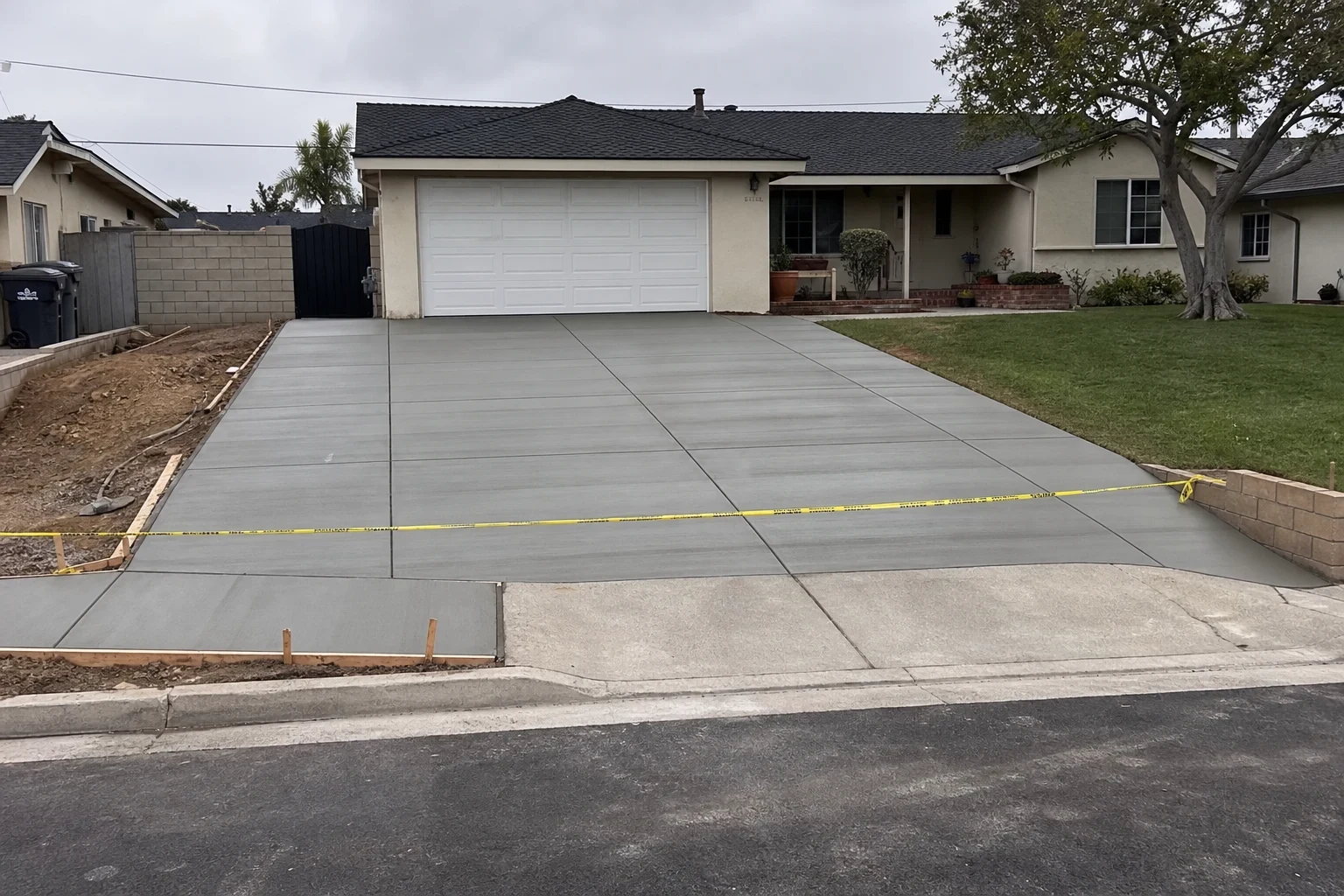
Where the pad meets your driveway, the street apron or a side gate, we shape the edges so the wheels roll on smoothly without bottoming out.
Signs it is time for a proper RV pad
Tires sinking into gravel or lawn
Ruts and soft spots mean the ground cannot hold the weight. Over time the RV leans and the jacks lose their footing.
The old slab is cracking under the load
If the coach sits on a thin slab that was built for cars, cracks that spread from the tire spots are the warning. That slab was never meant to carry this weight.
Water pools where the RV sits
Standing water under the coach adds moisture to the undercarriage and softens the ground. A sloped pad sends the water away.
A letter from the city or HOA
Notices about parking on the lawn or in the street are common. A paved space that meets the rules usually settles the matter.
Bringing a new rig home
A longer or heavier RV often needs a wider gate path and more slab than you have now. It makes sense to plan the pad before the RV arrives.
How an RV pad job runs
- 1
Phone conversation and site visit
We start with a call about your RV and where you hope to park it. Then we visit to measure the space and look at access, drainage and any utility lines or cleanouts in the area.
- 2
Rules, permits and a written scope
We confirm the setbacks and HOA requirements and find out whether any curb or sidewalk work needs city approval. You then get a written scope that covers thickness, reinforcement and finish.
- 3
Excavation, base and forms
The crew digs out, compacts the base, sets the forms and places the rebar. If an inspection applies, it happens before any concrete arrives.
- 4
Pour and finish
We place the concrete, screed it level to the planned slope and give it a broom finish so tires and shoes grip in the rain. Joints are cut at the right time, and we clean up the work area before we leave.
- 5
Cure before the RV
Concrete gains strength over weeks. We will tell you when a car is fine on the pad and how long to wait before parking a heavy coach or putting the jacks down.
What moves the price of an RV pad
The biggest factor is the size of the slab, but the work underneath and around it matters nearly as much. We give you a written scope so you can see where the money goes. If a permit applies, we explain it up front so it does not appear later as an extra.
- Length, width and thickness
- A Class A motorhome needs a longer and deeper slab than a small trailer. More concrete and more steel cost more.
- Soil and base depth
- Soft or clay-heavy soil may need deeper excavation and more aggregate before the slab can carry the weight.
- Access for equipment
- A narrow side yard can mean concrete has to be pumped or wheeled in rather than poured straight from the truck.
- Removal and approach work
- Breaking out old concrete or gravel, or widening the curb approach, adds labor. City approval for street-side work adds time too.
RV pad questions
Something not covered here? (714) 582-1691
How thick should an RV pad be?
It needs to be thicker than a patio or a standard walkway, and it should be reinforced with rebar. The right depth depends on the weight of your RV and the soil we find when we dig. We will tell you the thickness and give you the reasoning before we start.
Do I need a permit for an RV pad in Tustin?
A slab on your own lot often does not need a building permit, but that depends on the scope of the job. Widening a driveway approach or cutting the curb usually needs city approval. We check what applies to your property and explain it before any work begins.
Can I park my RV beside the house?
Often you can, as long as the gate is wide enough and the setbacks and HOA rules allow it. We measure the gate opening and the turning path so the RV can get in without clipping the fence or the eaves.
Can the pad tie into my existing driveway?
Yes. We form a clean joint between the new slab and the old one and match the grade so the transition is smooth. If you are also thinking about replacing the driveway, see our Driveways page.
Will the pad crack?
Most concrete develops some hairline cracks. Control joints, a compacted base and proper curing keep that cracking in planned lines and stop it from spreading as random breaks under the tires.
Plan a pad your RV can rest on
Tell us about your RV and where you would like to park it. We will talk through the size, the rules and the next steps.