ServicesDriveways
Concrete Driveways for Tustin Homes
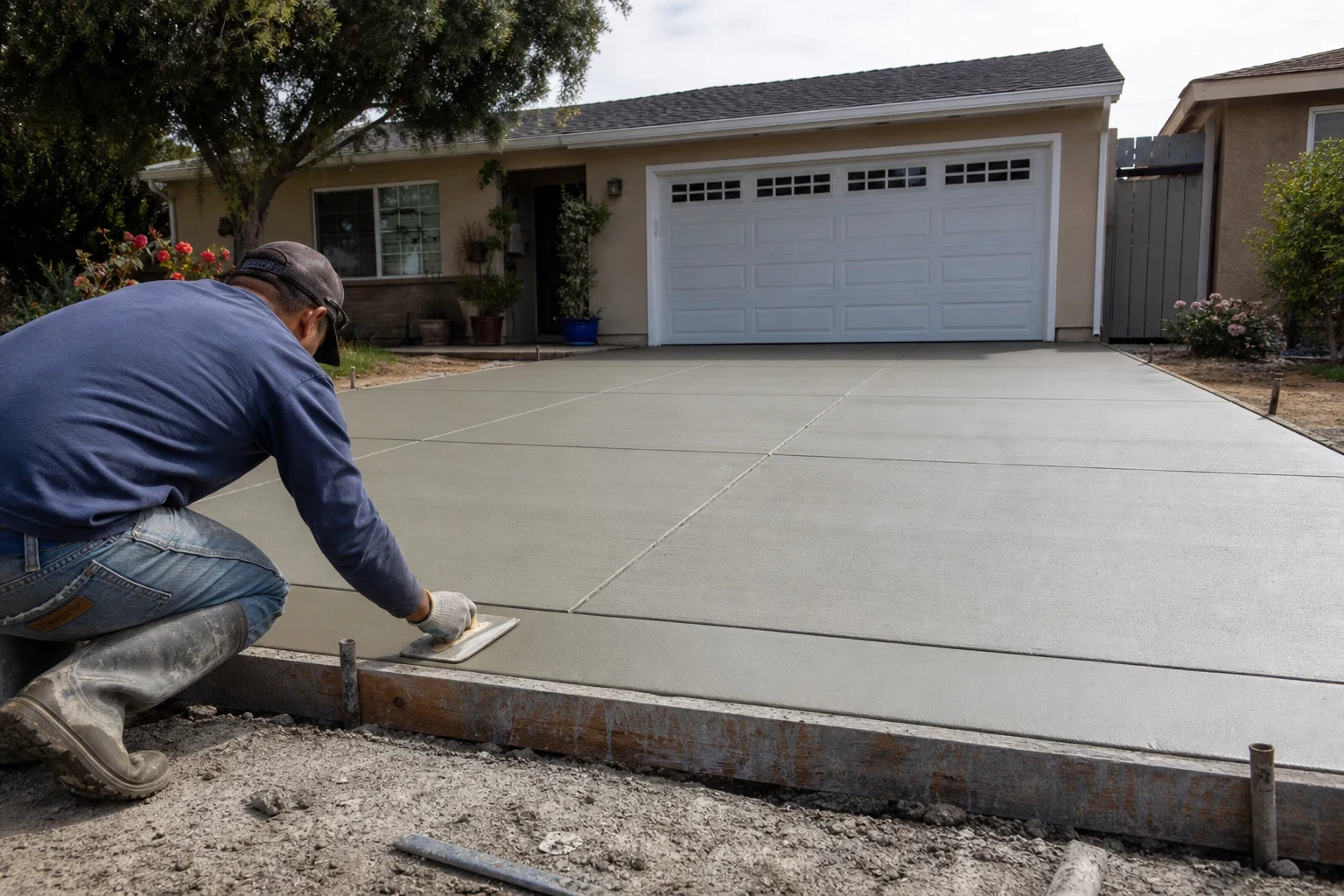
We tear out worn driveways and pour new ones over a well-compacted base, with the steel, slope and joints set before the concrete arrives. If the city requires a permit, we explain why, file it and book the inspection, so your driveway is correct on paper as well as on the ground.
Most of a driveway is out of sight
Your driveway holds up your cars daily for decades. How long it lasts is mostly settled before the truck arrives: removing the old slab, compacting the base, placing steel and forming a steady fall to the street.
Much of Orange County sits on clay that expands when wet and shrinks in dry months. We set base depth and joint spacing around that movement to give the new slab its best shot at staying flat and neat.
We also explain the paperwork simply. Work kept on your lot often needs little or none, but widening the approach or curb cut reaches into the public right-of-way and usually needs a city encroachment permit and inspection. We tell you which applies before starting.
What comes with a new driveway
Tear-out and hauling
We saw-cut neat edges where new meets old, break up the existing driveway and haul it off. Lawn, planters and the garage threshold stay protected while equipment is there.
Compacted base
The subgrade is graded, crushed aggregate goes down and is compacted in layers. A firm, even base does more than anything else to stop settling and cracking.
Reinforcing steel
Rebar or mesh is lifted on small supports so it lands near the middle of the slab. There it helps hold the concrete together, instead of lying useless on the dirt.
Grade and runoff
Forms are set so water flows away from the garage toward the street or a drain. Even a slight fall keeps puddles off and moisture away from the house.
Joints and surface
Control joints are cut at set spacing so cracks run straight. A broom finish grips well, and you can add exposed aggregate or a stamped border; our Stamped Concrete page shows those options.
Permits and inspection
If the city requires a permit, we apply and set up the inspection of forms and steel ahead of the pour.
When replacing the driveway makes sense
- Gaps that grow each season
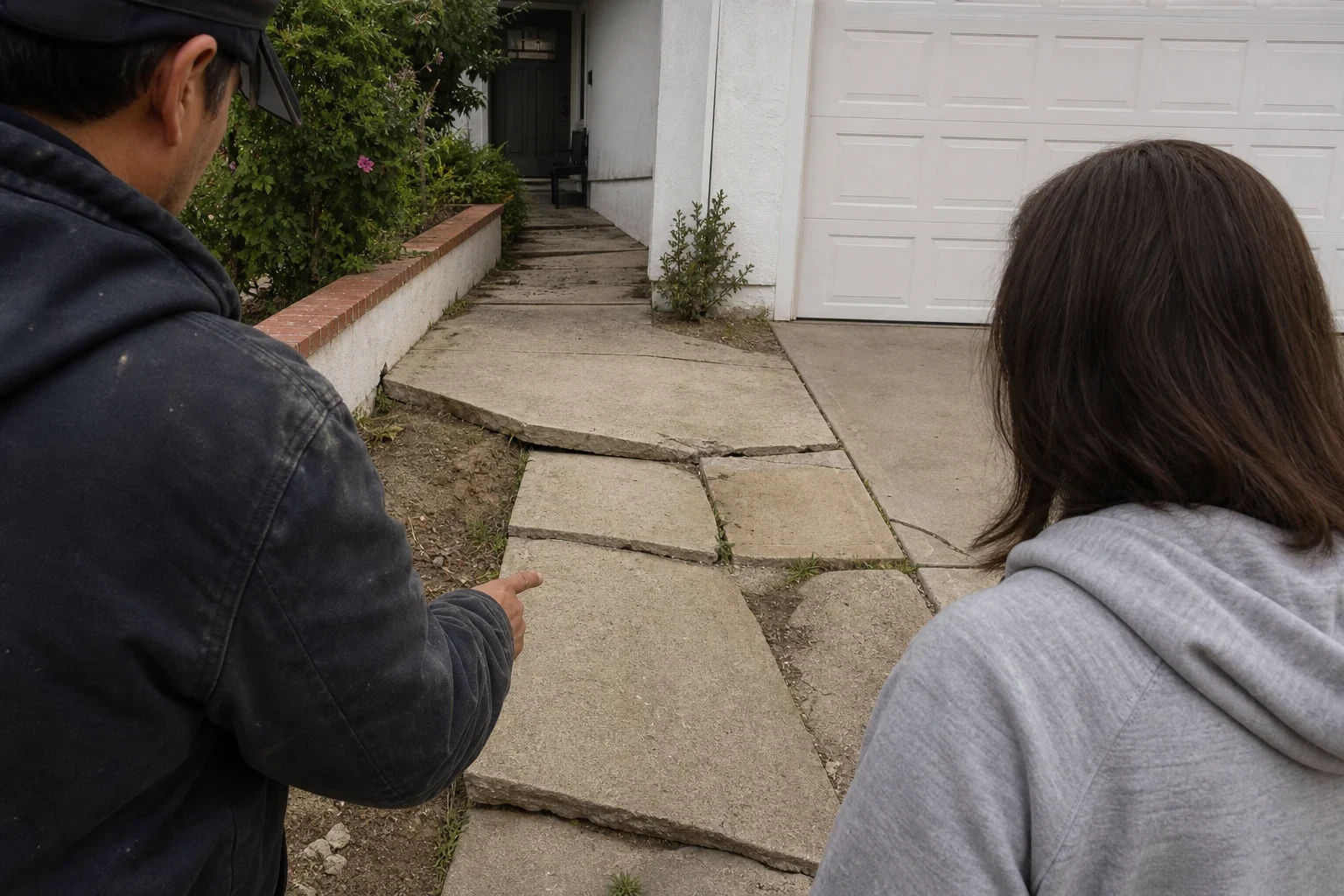
- Fine surface lines come with almost every slab and aren't a worry on their own. A gap you could slip a coin into, or one where one side sits higher than the other, usually means the base below has moved.
- Panels that have dropped or tilted
- A sunken or raised section leaves an edge to trip on and can catch the underside of a low car. Roots from nearby trees often push panels up.
- Rain heading back toward the garage
- Puddles at the garage door, or runoff that drifts toward the house, mean the slope was off from the start or the slab has settled since.
- A surface that flakes or pits
- Peeling patches, loose stones and a rough, scaly top suggest a weak finish or a mix that has worn down after years of traffic.
- More cars than the driveway was built for
- A second vehicle, a wider garage door or a new side gate can mean the driveway and its curb approach need to grow.
Steps in a driveway job
- 1
Site walk and measuring
We check the current driveway, slope, soil and curb approach, and ask how you use it. Then we tell you what we'd suggest and the reasons.
- 2
Estimate and city review
Your line-item estimate covers demolition, base, steel, finish and any city fees. If sign-off is needed, we file it and give you a realistic start date.
- 3
Tear-out and prep
The old slab comes out, the base is compacted, forms go up and steel goes in. Any required inspection takes place now, before concrete is poured.
- 4
Pouring and finishing
We place, level and finish the concrete in one continuous pour, then cut the joints. On hot days we begin early so the surface doesn't set too quickly.
- 5
Curing and handoff
We clean up, walk the driveway with you and explain curing. Foot traffic is usually fine in a couple of days, but allow about a full week before parking on it.
What affects the cost of a driveway
Each driveway is priced from its own measurements and site, so we give you the number by phone once we've seen it. The estimate splits the work into separate lines, with nothing lumped together.
- Area and depth
- Total area decides how much concrete, base and steel you need. Driveways for heavier vehicles may call for a thicker slab.
- Taking out the old one
- Thick slabs, heavy steel or old asphalt underneath take longer to break up and haul off.
- Ground and base
- Soft or loosely packed soil needs more digging and more base before it can hold a new slab.
- Surface finish
- Broom finish is the simplest. Exposed aggregate, color or stamped borders add labor and materials.
- Street approach and city rules
- Work at the curb often brings a permit, an inspection and city approach standards, which add steps to the schedule.
Common driveway questions
- Will a new driveway need a permit?
- That depends on the work. Replacing it in the same footprint on your lot often needs little or no paperwork, but widening it or changing the curb cut usually requires a city encroachment permit. We check before quoting and file when needed.
- When can I drive on it?
- Allow about a week before parking a car on fresh concrete, and more for heavy loads like a moving truck. Walking on it is usually fine earlier. Concrete keeps getting stronger for weeks, so easy use at first is worth it.
- Is my new driveway going to crack?
- Curing concrete shrinks, so some fine cracks are expected. Solid base compaction, steel and well-placed control joints keep them small and guide them into straight lines that are hard to see.
- Can my driveway be widened?
- Yes, and it's one of our most frequent requests. If the wider driveway needs a bigger approach at the street, we explain the city rules and include that approval in the plan.
- How long does the full job take?
- Tear-out, prep and pouring usually take a few working days, plus curing before you drive on it. City review and inspection timing can add time up front, and we tell you before booking.
Ready to plan your new driveway
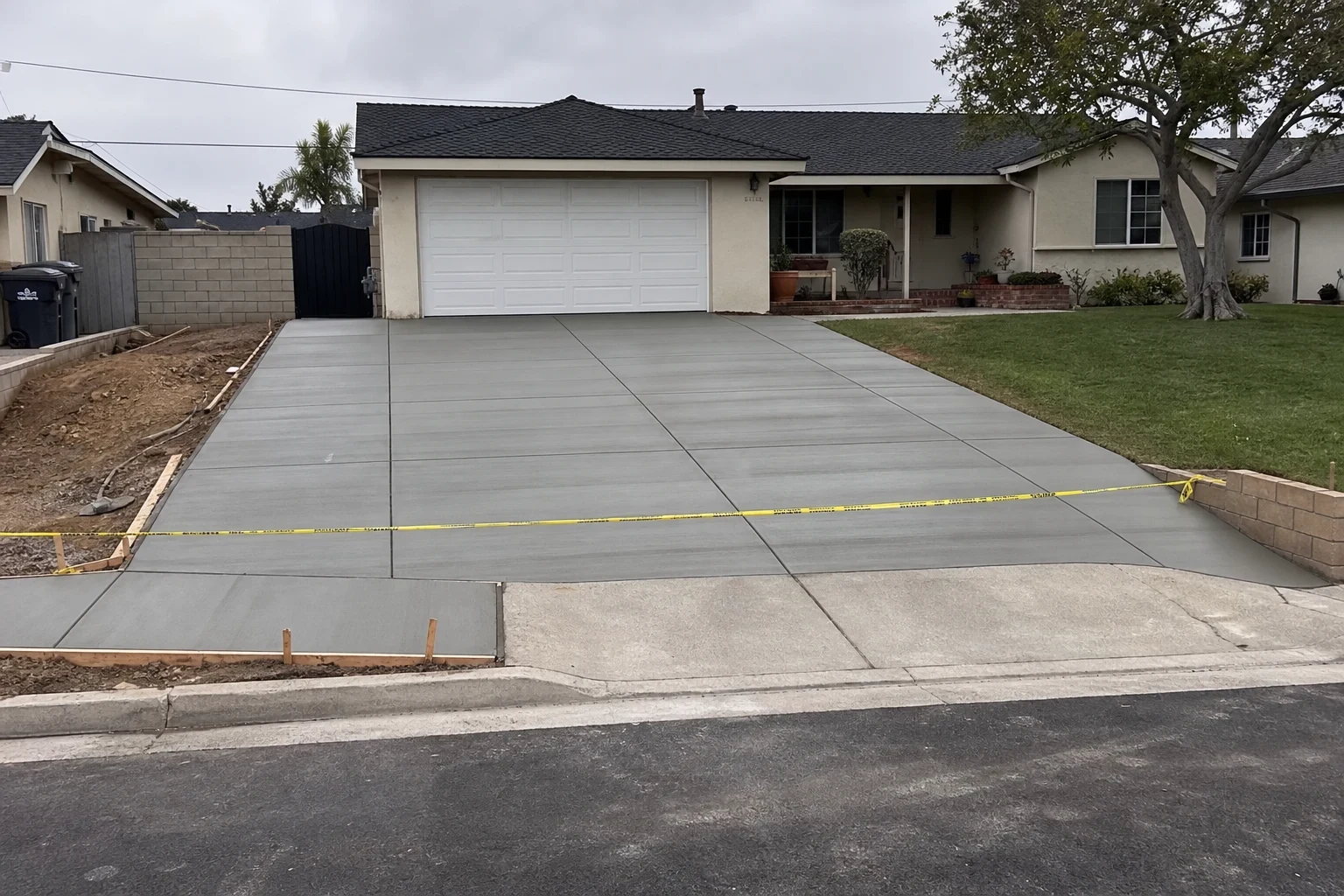
Tell us about your current driveway and what you'd like it to do. We'll explain the steps, any city paperwork involved and how we'd build it.