ServicesStamped Concrete
Stamped Concrete for Tustin Homes
A stamped slab looks like stone, slate or brick but pours as one solid surface. We work out the color, the pattern and the joint layout with you, compact a real base underneath, and take care of any permit the job calls for, so the look you pick lasts.
A patterned finish built on a sound slab
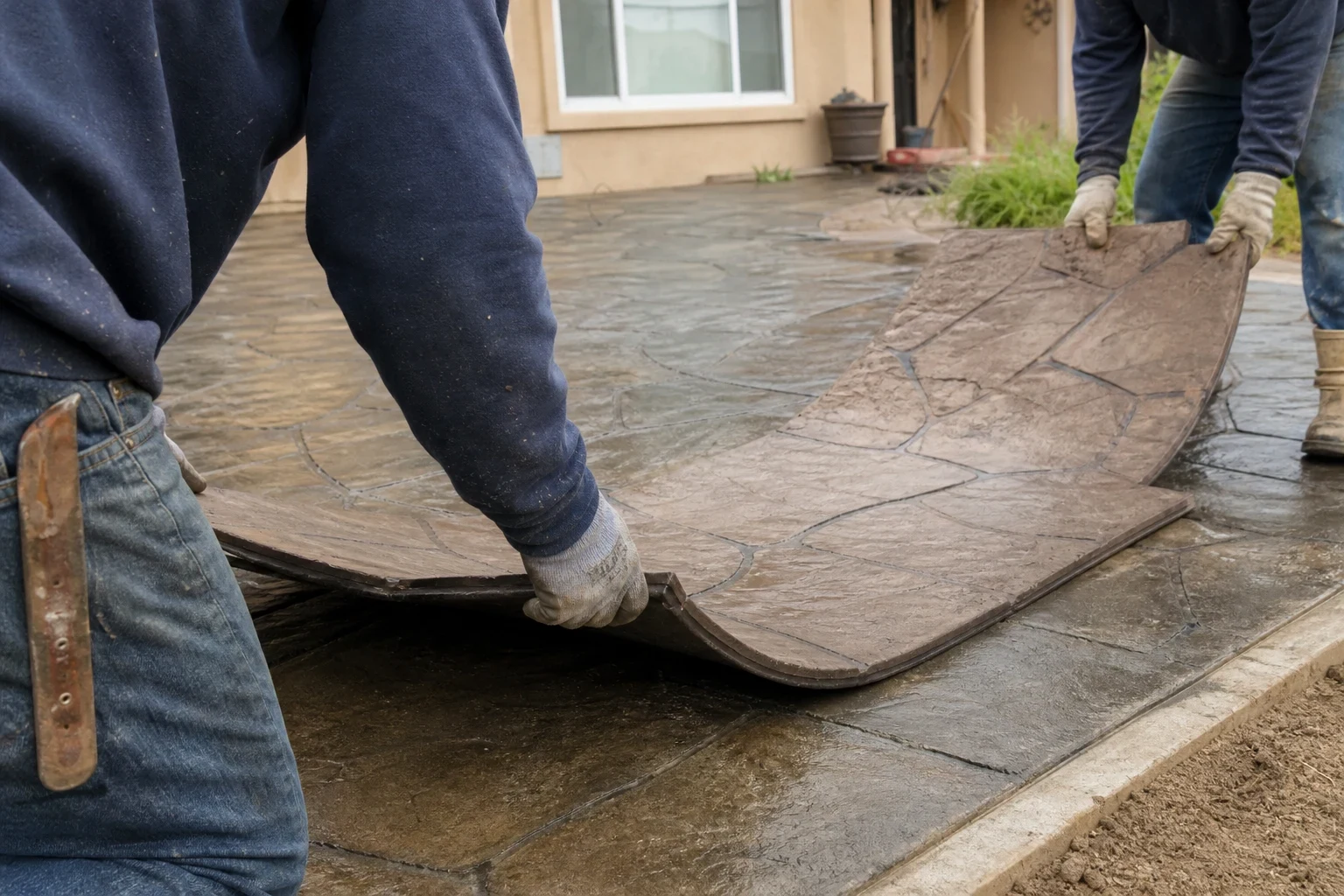
Stamped concrete is ordinary structural concrete that is colored, then pressed with textured mats while it is still workable. Done well, it reads as cut stone or old brick. Done poorly, it fades, flakes and cracks right through the pattern. The difference is almost all in what you can't see: the base, the reinforcement, the timing of the stamp and the placement of the control joints.
It is the right call when you want a decorative surface on a patio, walkway, pool surround or driveway and would rather not maintain hundreds of loose pavers. We pour new slabs; we do not stamp over old concrete. Before we quote, we also tell you plainly whether your project needs a permit or inspection and what that involves.
What comes with a stamped concrete job
Tear-out and grading
The old surface is broken up and hauled off, and the soil is shaped so water runs away from the house. Orange County clay expands and contracts, so we build up and compact crushed rock in layers instead of pouring over loose ground.
Forms and steel
Forms are set to the final height and fall. Rebar or mesh rests on supports so it ends up in the middle of the slab, where it can work.
Two ways to add color
Integral color runs through the full depth, so a chipped spot shows the same shade below. A broadcast hardener gives a deeper surface tone and a tougher top layer. You see samples of each.
Mats and release
We lay the mats in order once the concrete stiffens to the right point. A powder or liquid release stops them sticking and leaves a soft, aged tint in the recesses.
Joints and sealing
We cut joints along the pattern's own lines so they blend in. Once cured, the slab is washed and sealed, with grit mixed in wherever it will get wet.
Signs stamped concrete is a good fit
Your plain slab is due for replacement
If the old patio or walk is heaving, sunken or badly broken and coming out anyway, the new pour is the natural moment to add pattern and color.
Pavers keep shifting
Loose pavers settle, grow weeds in the joints and trip people. A stamped slab gives a similar look in one piece.
You want the house and yard to match
Stamped concrete can pick up the tones of your stucco, tile roof or stone trim, which ties the outdoor space to your home.
Water sits against the foundation
Puddles near the walls mean the current surface slopes the wrong way. A new stamped slab lets us correct the grade while you upgrade the finish.
Steps in a stamped concrete project
- 1
Call and measure
First we talk by phone about your plans, then come out to measure, look at drainage and check how a truck or pump will reach the area. You then get a written estimate with demolition, base, color and sealer on separate lines.
- 2
Layout and permits
Backyard flatwork on private land usually skips the building permit, but driveway approaches and work touching the city sidewalk usually need one. We confirm which applies, file when required and book any inspection ahead of the pour.
- 3
Prep work
Tear-out, base, forms and steel typically go in at least a day early. Walls, plants and any hardscape staying in place are covered.
- 4
Pouring and stamping
The crew places, levels and colors the concrete, then stamps it within one working window. Because timing is tight, we start early and stay out of the hottest part of the afternoon.
- 5
Curing, sealing and cleanup
After several days of curing, we wash and seal the surface, remove the forms and sweep the site.
What changes the cost of stamped concrete
Color, mats and added crew hours on pour day put stamped work above a plain broom finish. The figure depends on the area's size and shape and on what we uncover below it. Each part is listed separately on your estimate.
- Area and shape
- Big open slabs cost less per foot. Curves, steps and tight corners need extra forming and handwork.
- Pattern and color
- One color and one pattern is the simplest job. Borders, an accent color or hand-carved edges add hours.
- Tear-out and soil
- A thick old slab to remove, or soft ground that needs deeper rock, means more labor and hauling.
- Access and city rules
- A tight side yard can require a pump or wheelbarrows rather than a direct chute. Driveway approaches may bring city fees and an inspection.
Common stamped concrete questions
Something not covered here? (714) 582-1691
Does stamped concrete get slippery near a pool?
Sealer can make concrete slick when wet, so on pool decks, steps and walks we add fine grit to it. Rougher textures like slate or stone also grip better than smooth ones, and we suggest patterns with footing in mind for wet spots.
Will a stamped patio need a permit?
Not usually, if the patio sits entirely on your lot. Driveway approaches and work in the public sidewalk area typically need a city permit and inspection. We check your job and let you know before you decide.
Is it going to crack?
Any concrete can form small cracks while curing or as the ground shifts. A solid base, steel and well-placed control joints keep cracks in the joints, where they are hard to spot, which is why we line joints up with the pattern.
When can we start using it?
Walking on it is usually fine after a day or two. Furniture can return in roughly a week, and a stamped driveway needs longer before cars. We give you the exact timing on pour day.
How often should it be resealed?
Every two to three years is typical, more often where strong afternoon sun or pool water hits it. A fresh coat keeps the color rich and the surface easy to wash.
Can my current slab be stamped?
We do not stamp over old concrete; we pour a new slab. Taking out the old one lets us correct the base and drainage, and that is what makes the finish last.
Pick your pattern with the crew that pours it
Describe the area and the look you want. We will go over colors, patterns and what the city expects for your job.